
22,000,000,000,000,000,000,000: A Cosmic Census
Statistically Speaking, the Universe is Brimming with Life

Think of a number between 1 and 22^21 (that’s 22 sextillion, or 22 followed by 21 zeroes). Got your number? Okay good, now hold onto that number, we’ll come back to it.
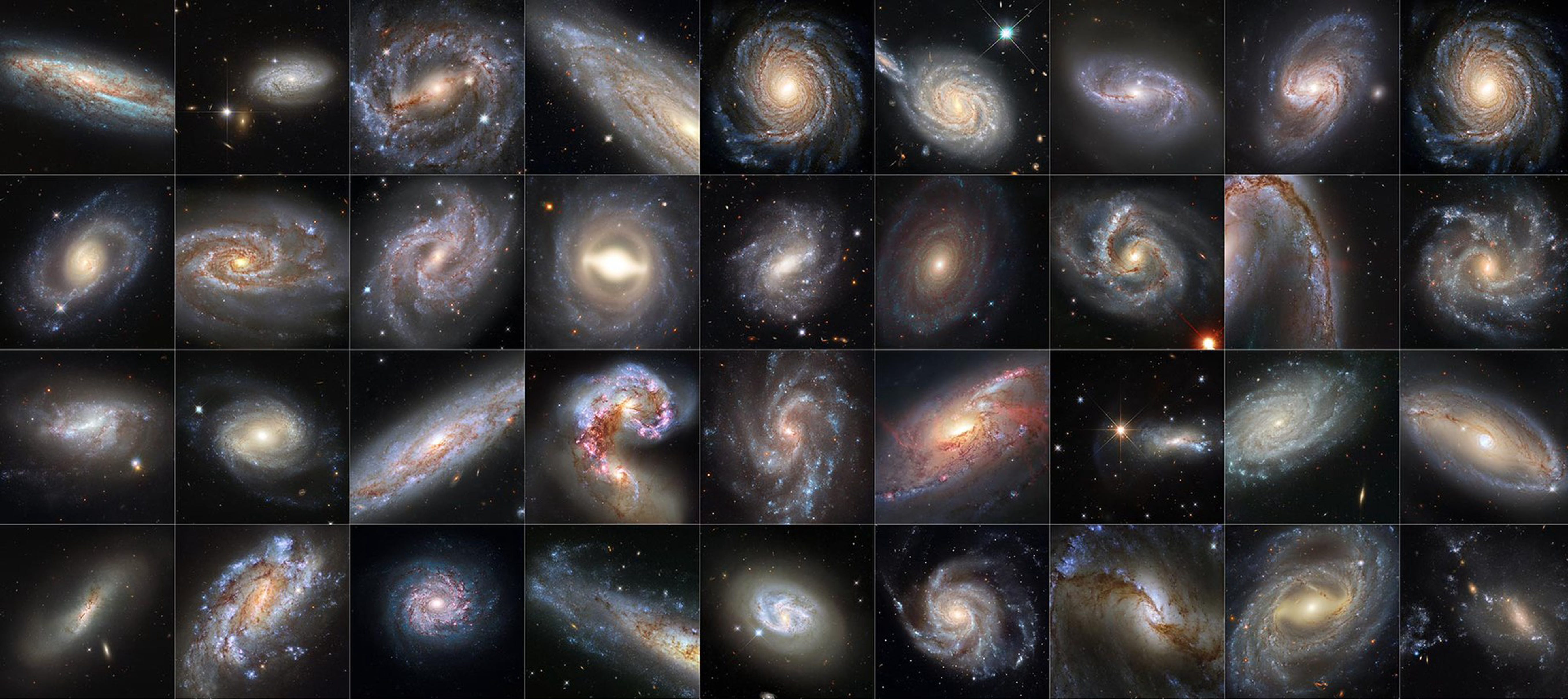
If you’re an astronomy/physics geek like me, you’ll recognize the name K2-18b. It’s a planet orbiting a red dwarf star 124 light-years away (K2 for the Kepler space telescope’s second mission, 18b indicating it’s the second planet discovered around the 18th star catalogued). Scientists may have detected a compound in its atmosphere that just might be dimethyl sulfide—a molecule that, on Earth, is only produced by living organisms. The researchers are being appropriately cautious, using phrases like “possible biosignature” and “best explanation for observations,” because nobody wants to be the person who accidentally declares we’ve found alien life based on what turns out to be cosmic flatulence. But here’s what struck me about this discovery: it’s not just that we might have found life elsewhere—it’s the sheer audacity of finding it at all in a universe so preposterously vast that the numbers make your brain hurt.
But what does “vast” really mean? How many galaxies are there? How many stars in the universe? And for that matter, how many planets (or more appropriately, how many potentially habitable planets)? Ready to crunch some numbers? Like all high school math problems, this math will either fill you with wonder or send you spiraling into an existential crisis (hopefully the former).
Let’s start with what we can actually see. The Hubble Space Telescope’s Deep Field observations revealed something that should have been front-page news everywhere: in a pinpoint patch of sky no bigger than a grain of sand held at arm’s length, astronomers counted over 3,000 galaxies. Scale that up to the entire observable universe, and estimates range upwards to around 2 trillion galaxies—that’s “illion“ with a “tri“ in front of it.
But here’s where it gets deliciously rabbit-hole-ish: that number keeps changing as we get better at looking. NASA’s New Horizons spacecraft, now traveling far beyond Pluto, has given us a cleaner view of deep space—beyond the light pollution and cosmic dust that interferes with Earth-based observations. Its camera revealed we might not need nearly as many galaxies as we thought to account for all the light we see. Suddenly estimates dropped toward a much lower range, around 100 billion. Meanwhile, other astronomers suspect we’re missing countless tiny, ultra-faint dwarf galaxies—the cosmic equivalent of discovering your neighborhood has hundreds more houses than you thought, just really small ones tucked behind the big ones. When you account for these invisible populations, estimates range as high as 6 to 20 trillion galaxies.
Current best guess? Somewhere between 100 billion and 2 trillion galaxies in our observable universe, each containing billions or hundreds of billions of stars. So then how many stars in the universe? And at this point, does speculating about such a vast number even matter? The answer is a resounding YES! and here’s why.
When I was growing up in the 1970s, the prevailing wisdom suggested habitable planets were rare cosmic accidents. Today, the Kepler Space Telescope and other planet-hunting missions have revolutionized that thinking entirely. Nearly every star we examine closely turns out to host planets—often multiple worlds orbiting in complex gravitational dances.
Current estimates suggest our own humble Milky Way, a perfectly ordinary spiral galaxy, hosts an estimated 100-400 billion stars, which may mean anywhere between 100-400 billion planets. That’s roughly one planet per star, give or take a few hundred billion. To put this in perspective: astronomers have actually discovered 5,885 planets beyond our solar system so far. That’s like trying to estimate world population by meeting five people, then extrapolating to billions—yet the math holds up remarkably well. Many of these worlds orbit within their star’s “habitable zone”—that Goldilocks region where liquid water could exist. Conservative estimates put potentially habitable planets in the Milky Way at around 11 billion.
Now scale that up. If each of those 100 billion to 2 trillion galaxies contains a similar proportion of habitable worlds orbiting a similar quantity of stars—using our conservative estimate of 11 billion per galaxy—we’re looking at somewhere between 1 to 22 sextillion habitable worlds in the observable universe. That’s a 22 followed by 21 zeros, numbers so large they defeat comprehension. Take a moment to meditate on it: 22,000,000,000,000,000,000,000
Here’s where it gets interesting: if life arose just once in every trillion habitable worlds (mind-bogglingly rare odds), we’d still have 1 to 22 million living planets scattered across the cosmos. If the odds are merely one in a billion—still spectacularly unlikely low odds—we’re talking about 1 to 22 billion planets teeming with life.
This isn’t wishful thinking anymore; it’s statistical inevitability. The universe isn’t just large—it’s so fantastically, preposterously enormous that even the most improbable events become certainties when multiplied across such scales. The old notion of Earth as a unique miracle has given way to something far more thrilling: we’re living in a universe where planets are the cosmic norm, not the exception, and life is, well, abundant.
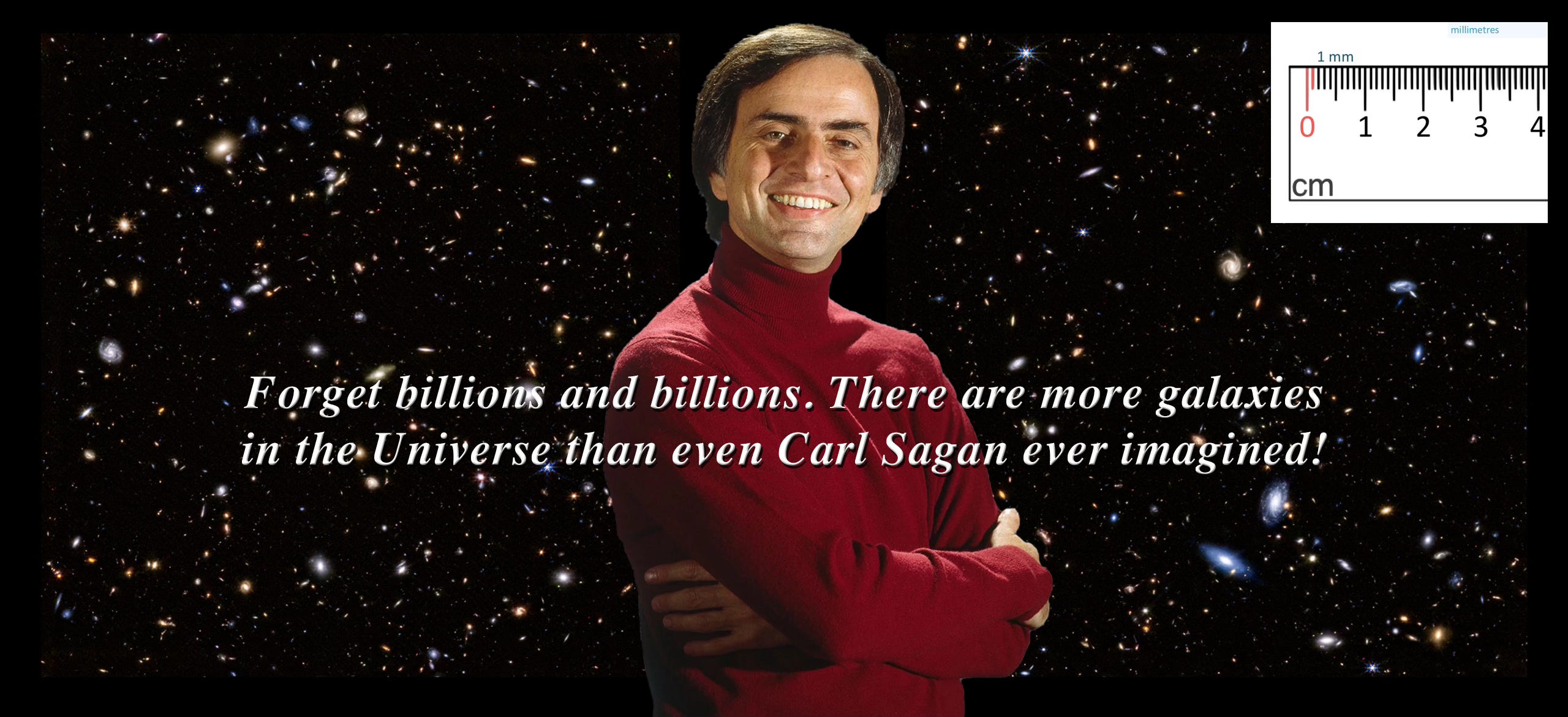
So when scientists peer at K2-18b and detect potential signs of life, they’re not discovering an impossible anomaly—they’re glimpsing what might be the universe’s most common story, playing out on scales that dwarf our wildest imagination. We’re not alone. We never were. We’re just learning how to listen to the vast cosmic conversation that’s been happening all around us, across trillions of worlds, for billions of years. There’s a name for this dawning awareness of humanity’s diminutive status, this “delusion that we have some privileged position in the Universe.” My friends call it CIT: Cosmic Insignificance Therapy.
Okay, now remember that number you guessed between 1 and 100 sextillion? Hold onto it a little tighter now. In a cosmos this vast, that random number you plucked from thin air might be the exact count of worlds where other curious minds are tumbling down their own rabbit holes, marveling at their own impossible universe.
The math doesn’t lie. The universe is alive. - ∞