
The Forgotten Bookshelf: Remembering Roadside Picnic
The Unsettling Reality of Alien Indifference

Think of the last time you stopped at a highway rest area. You stretched your legs, grabbed something from a vending machine, or perhaps sat at a picnic table to eat a burger. Looking down, you noticed the inevitable litter—empty coffee cups, crumpled wrappers, a crushed soda can, cigarette butts. The careless debris of humanity, left for ants to puzzle over long after we’ve roared back onto the interstate.
Now flip that image: What if we are the ants?
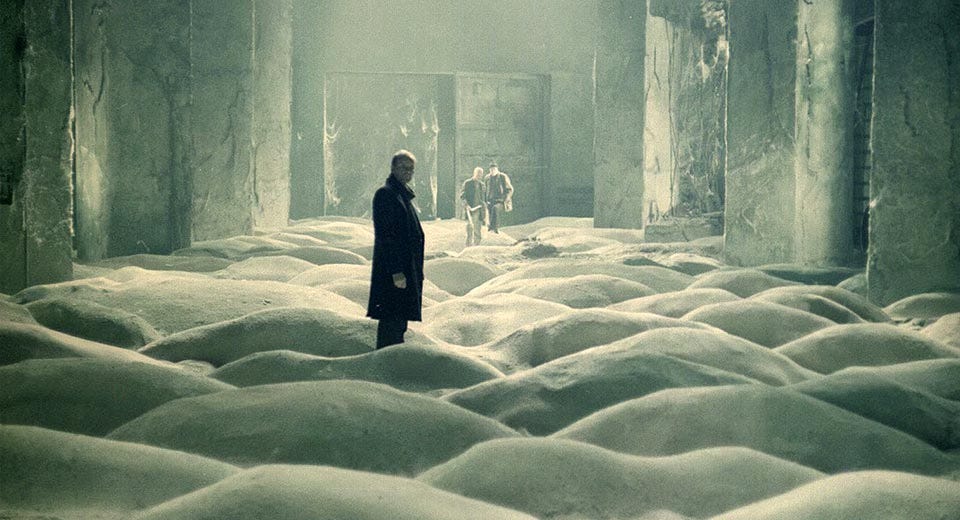
This is the premise of Roadside Picnic, the 1972 Soviet science fiction masterpiece by Arkady and Boris Strugatsky. Aliens have visited Earth—not for conquest or communication, but apparently for reasons so mundane they didn’t even notice us. They departed, leaving behind mysterious zones filled with artifacts that operate according to principles so foreign that our entire framework for understanding reality proves inadequate.
The title captures everything: we are insects trying to make sense of discarded beer cans and cigarette butts, items whose purpose and origin lie forever beyond our comprehension.
This isn’t the science fiction of your youth—no laser battles, no heroic space captains, no technology that ultimately makes comfortable sense. The Strugatsky brothers asked a more disturbing question than most writers dare: What if contact with aliens revealed not wonder, but our complete irrelevance?
To understand this book, we need to grasp something about the world that created it. The Strugatsky brothers wrote during the long, slow decay of the Soviet Union, where daily life meant navigating systems whose logic remained forever opaque to those caught within them. Information was controlled, truth was negotiable, and powerful forces shaped individual lives according to dictates ordinary people could neither understand nor influence.
This wasn’t abstract political theory—it was breakfast, lunch, and dinner. The brothers had lived through Stalin’s purges, World War II, and decades of Soviet propaganda. They knew what it felt like to be ground up by incomprehensible machinery.
That experience saturates every page of Roadside Picnic. The novel’s Zone—an area contaminated by alien visitation where physics goes haywire—serves as the perfect metaphor for life under any system that operates beyond human understanding. Yet the brothers’ genius lies in refusing simple allegory. The Zone isn’t just about Soviet bureaucracy; it’s about our relationship with the fundamentally incomprehensible.
The Stalker’s Dilemma
The protagonist, Red Schuhart, is a “stalker”—someone who illegally enters the Zone to retrieve alien artifacts for the black market. These objects mock human understanding: a “full empty” that’s simultaneously full and empty, gravitational anomalies that crush anything in their path, wish-granting devices that twist desires into nightmares.
Red inhabits a world of bureaucratic corruption and black-market survival, where official scientific expeditions lumber forward with crushing inefficiency while stalkers risk everything just to get by. But he’s no romantic outlaw—he’s a decent man slowly being destroyed by forces he can neither comprehend nor escape.
The aliens didn’t leave their artifacts as tests or gifts. They’re cosmic litter, as meaningless to their creators as a discarded soda can is to us. This is perhaps the novel’s cruelest insight: the universe contains intelligences so vast that our entire civilization registers as background noise.
Questions Without Answers
Roadside Picnic distinguishes itself not through technology or politics, but through its philosophical courage. The Strugatsky brothers created a work that explains nothing, resolves nothing, and offers no heroes who triumph through understanding. Instead, we watch Red’s daughter slowly die from Zone contamination while he returns again and again to the place destroying his family—because it’s the only way he knows to survive.
The novel’s final scene—Red’s desperate plea to an alien artifact that might grant wishes—remains one of literature’s most powerful moments precisely because it offers no resolution. We’re left with questions that mirror our own relationship to existence: How do we find meaning in a universe that might not notice our suffering? How do we maintain hope when the forces shaping our lives operate beyond our understanding?
These questions feel less like science fiction today and more like daily experience. We live surrounded by algorithms we can’t comprehend, economic systems beyond individual control, and global forces that dwarf human agency. The Strugatsky brothers’ vision of humanity confronting the truly alien has become a field guide to modern existence.
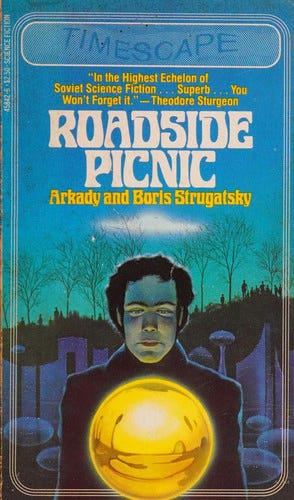
For readers who prefer their mysteries solved and their universes ultimately comprehensible, Roadside Picnic will prove deeply unsettling. But for those willing to embrace literature that asks profound questions without pretending to answer them, the brothers offer something rarer: a masterpiece that grows more relevant with each passing year.
The Zone awaits. It won’t make sense. But maybe that’s where we find the courage to persevere. - ∞