
Hidden History: Pesach by Any Other Name
Happy Eostre! While much of the world celebrates "Pascha," English speakers took a decidedly pagan detour that combines the Resurrection with ancient spring festivals

A FESTIVAL BY ANY OTHER NAME
Long before chocolate bunnies invaded grocery stores, the celebration we call Easter emerged from a fascinating blend of pagan festivities and Christian observances—like two religious traditions awkwardly sharing an Uber.
The English word "Easter" likely derives from "Eostre" (also spelled Ostara), an Anglo-Saxon goddess of dawn, spring, and fertility. The Venerable Bede, an 8th-century English monk and historian, first documented this connection, essentially capturing the moment Christianity said to paganism, "Nice spring festival you've got there. Mind if I borrow it?"
Meanwhile, most other languages use terms derived from the Hebrew "Pesach" (Passover): "Pascha" in Greek, "Pâques" in French, and "Pascua" in Spanish. This linguistic split reflects Easter's dual heritage—proving once again it's easier to borrow from paganism than fight centuries of egg-decorating enthusiasm.
EASTER SUNDAY: A MATHEMATICAL HEADACHE
Calculating Easter Sunday makes doing your tax returns look straightforward. According to the Council of Nicaea's established formula of 325 CE, Easter falls on the first Sunday after the first full moon following the spring equinox. Medieval churches employed special "Paschal Calculators"—essentially ancient computers minus the electricity, processing power, or ability to play Minecraft. These mathematical wizards (usually sleep-deprived monks) would perform astronomical computations that determined Easter's date years in advance, a task that often led to heated theological debates and the occasional ecclesiastical migraine.
THE HARE'S STRANGE TALE
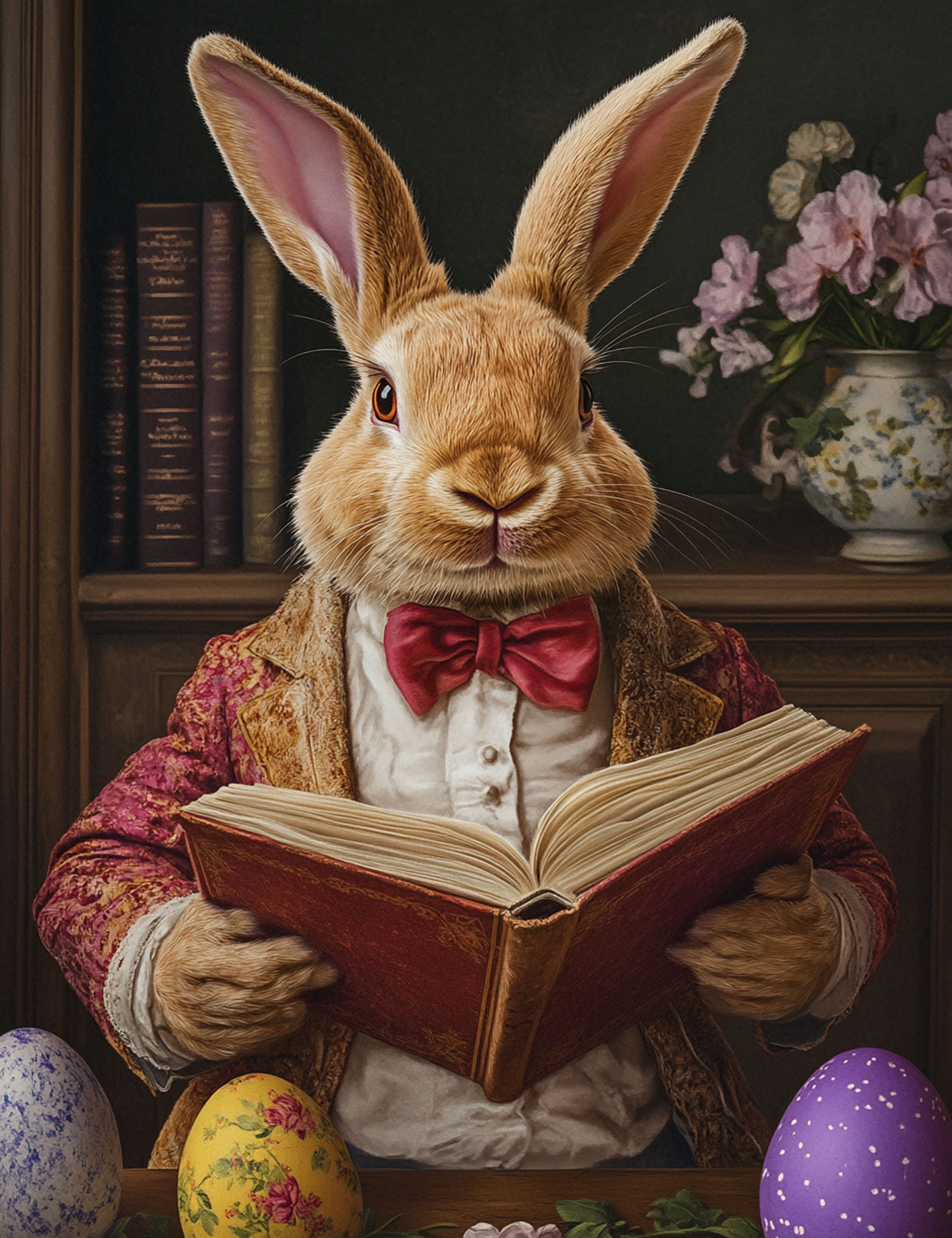
The Easter Bunny we know today first hopped into Germanic folklore in the 1600s as the "Osterhase" or "Easter Hare." Unlike our candy-delivering friend, this original hare judged whether children had been good or bad during Eastertide—essentially Santa Claus with long ears and apparently some seasonal part-time work.
Why a rabbit? Ancient pagans celebrated the goddess Eostre with symbols of extraordinary fertility—and few creatures embodied prolific reproduction better than the humble hare. The rabbit's reputation for abundant offspring made it a natural symbol for a springtime festival, because nothing says "spiritual renewal" quite like unrestrained procreation.
In a twist that would make any biology teacher cringe, medieval scholars actually believed hares were hermaphrodites capable of virgin birth—a convenient parallel to certain religious narratives that made the leap from pagan to Christian symbolism smoother than a chocolate bunny left on a radiator.
THE EGG ENIGMA
The tradition of Easter eggs predates Christianity by several millennia. Ancient Egyptians, Persians, Romans, and Chinese all exchanged decorated eggs during spring festivals, seeing the egg as the perfect symbol of life emerging from apparent lifelessness—nature's original surprise package.
During medieval times, eggs became entwined with Lenten fasting traditions. Since eggs were forbidden during Lent, people would hard-boil them to preserve them, then decorate and eat them to celebrate the end of fasting—essentially creating history's first leftover food craft project.
By the 13th century, King Edward I of England ordered 450 eggs to be gold-leafed and distributed to the royal household for Easter, proving that excessive Easter gift-giving isn't just a modern marketing ploy but a time-honored royal tradition.
The most luxurious Easter eggs emerged from the workshops of Peter Carl Fabergé, who created his first ornate egg for Russian Tsar Alexander III in 1885. These bejeweled masterpieces contained "surprises"—tiny mechanical birds or elaborate miniature palaces—making your plastic egg filled with jelly beans seem slightly inadequate by comparison.
THE PYSANKY PHENOMENON
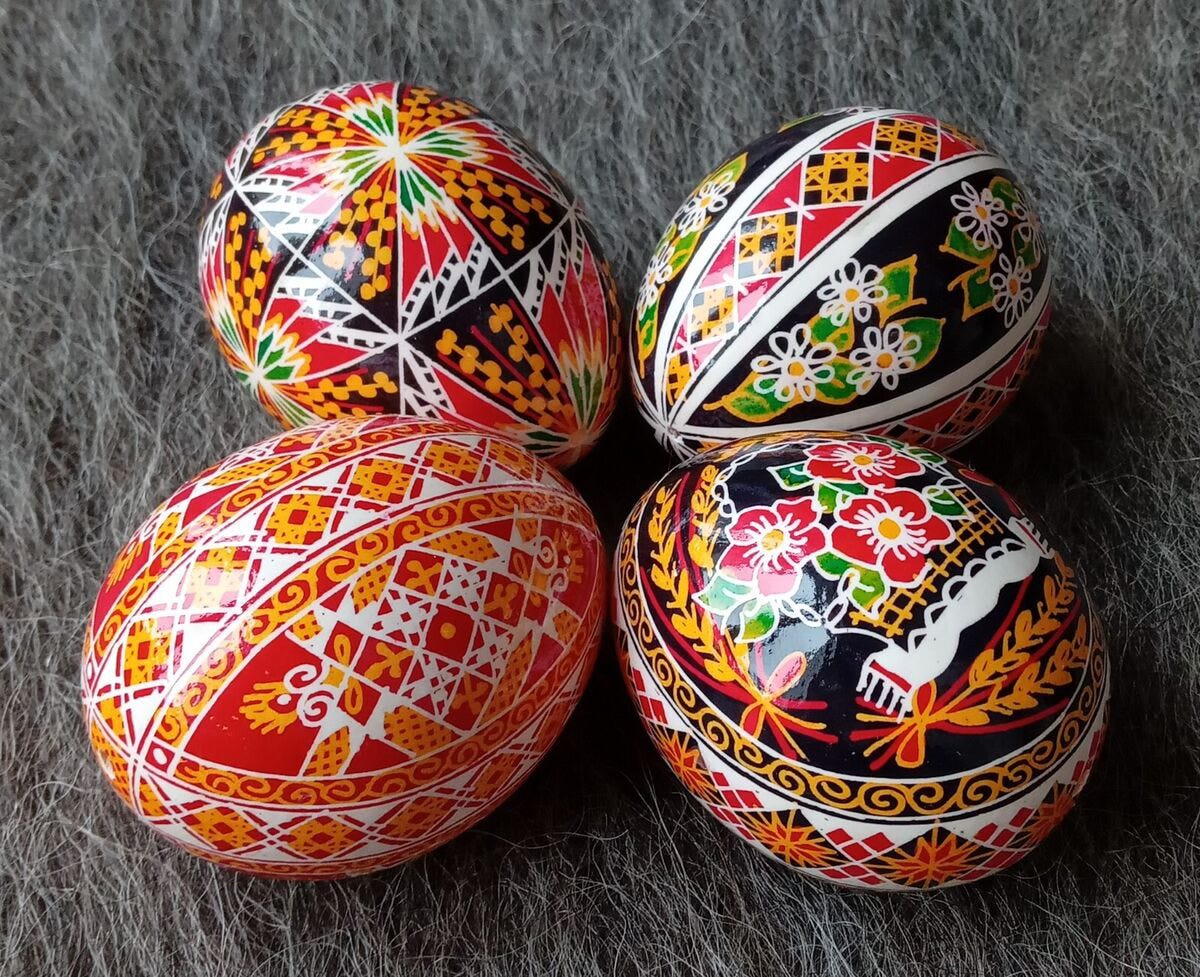
While your childhood egg-dyeing kit with those wimpy pastel tablets might seem impressive to a five-year-old, it pales in comparison to the Ukrainian art of pysanky—a word derived from the verb "pysaty," meaning "to write." These aren't just decorated eggs; they're intricate masterpieces that make your lopsided polka-dotted creations look like they belong in the refrigerator, not a museum.
The tradition dates back to pre-Christian times when ancient Slavs created these decorated eggs as powerful talismans. Legend has it that an evil monster (because there's always an evil monster) was chained to a cliff, and each pysanka created would tighten those chains. Should people stop making them, the beast would break free and devour the world—possibly the most dramatic crafting motivation in history.
Each symbol and color held specific meaning: triangles represented the three domains of existence (sky, earth, and underworld); deer stood for wealth; and spirals signified the journey between life and death. When Christianity spread through the region, it did what it does best—adopted the tradition and added its own symbolism, in what might be history's most successful cultural rebranding.
The most skilled artists use a wax-resistant method involving a specialized tool called a kistka to draw molten beeswax designs on eggs, dipping them repeatedly in progressively darker dyes—a process requiring the patience of a saint and the steady hand of a brain surgeon. The resulting geometric masterpieces are less "cute Easter decoration" and more "how is that even possible on an egg?"
So there you have it—a holiday that combines pagan fertility symbols, astronomical calculations, and egg decorating into Christianity's most important celebration. Whether you're hunting for eggs or attending sunrise service, you're participating in traditions older than chocolate itself, which might be the biggest miracle of all. ∞