

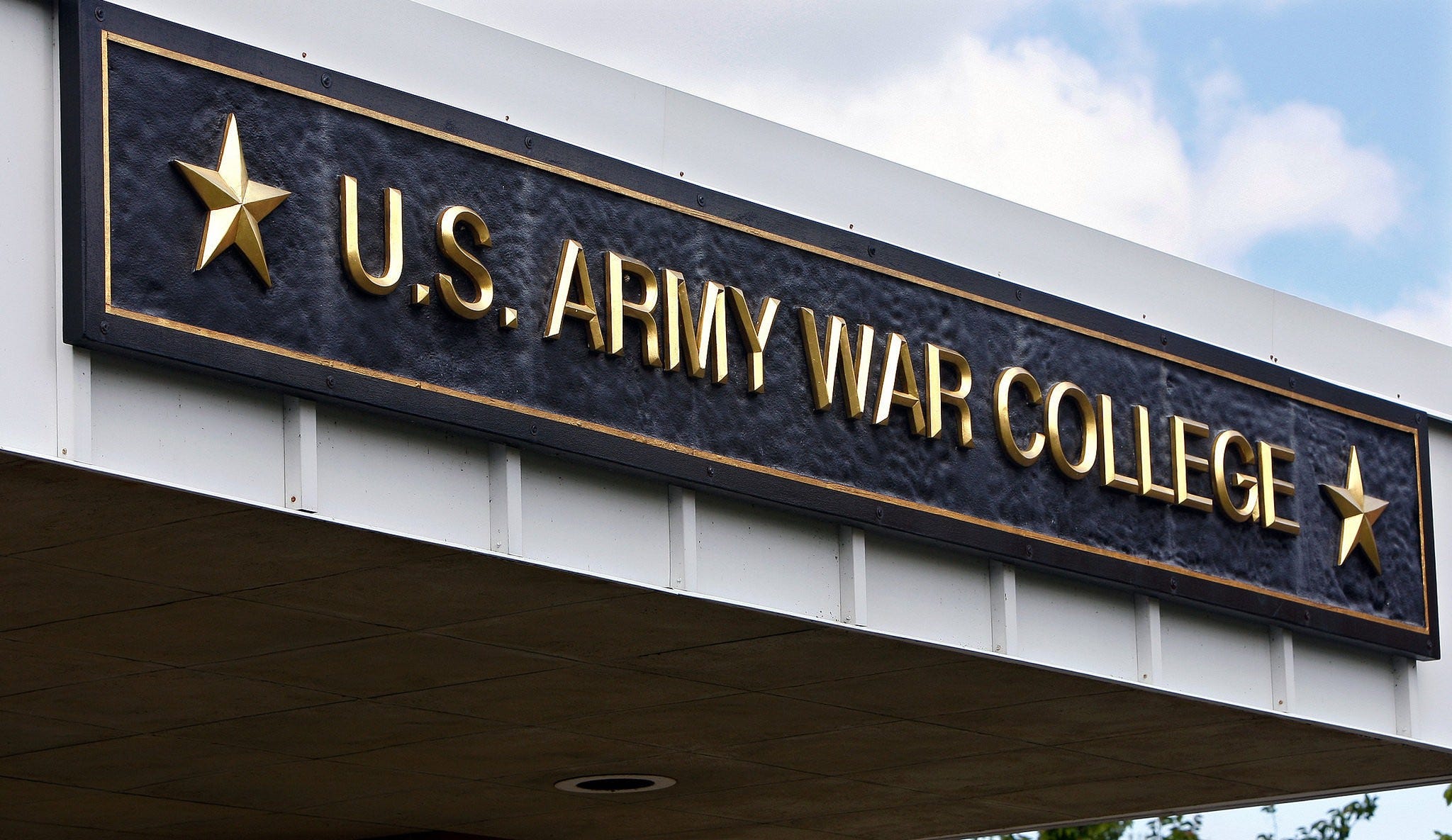
Every retired soldier’s home office has one: the “I Love Me” wall, where we hang all the cool stuff the military awarded us to boost our self-esteem and prove to our kids how important we were. My wall has clearly adapted to my new reality over the years. For example, at some point my United States Army War College diploma was replaced with an X-Files “I Want to Believe” poster. Not long ago, if you’d asked me which of those two items would prove more useful in understanding American foreign policy in 2026, I’d have said the degree. I’d have been wrong. The X-Files poster — I Want to Believe — just might be providing a more coherent strategic framework than anything coming out of the Pentagon.

I earned that War College master’s degree by spending a year studying the accumulated wisdom of military strategy — Clausewitz, Sun Tzu, Thucydides, the whole crowd — distilled into a set of principles that generations of American strategists had refined through trial, error, and a considerable amount of bloodshed. These principles had names. They had doctrines. Most of all, they had PowerPoint presentations. Many, many, many PowerPoint presentations. They were serious, evidence-based frameworks for deciding when, why, and how a nation should go to war.
I want to believe these principles are currently guiding American military operations.
But that’s not what’s happening.
Instead, I’m watching the news at 3 AM — which I used to reserve for late-night infomercials and reorganizing my Tupperware — and I’m slowly realizing that the United States has launched a major war against Iran using a strategic framework I can only describe as “let’s find out.”
There was a time, not long ago in the grand sweep of military history, when the United States had actual rules about going to war. Not the Geneva Convention rules — those are the legal ones everyone’s heard of. I’m talking about the unwritten rules. The strategic common sense. The institutional muscle memory that kept us from doing spectacularly stupid things, or at least gave us a framework for recognizing when we were about to do spectacularly stupid things. Now to be fair, those common-sense principles have been put through the wringer the last two decades, like a favorite old sweater that’s been washed and dried so many times you use it for the dog’s bed.
You’re probably too young or too disinterested to recall the Weinberger Doctrine. In 1984, Caspar Weinberger — Reagan’s Secretary of Defense — laid out six conditions for committing U.S. forces to combat, including that the engagement should be in our vital national interest, that we should have clearly defined political and military objectives, and — this is the important part — that the commitment of forces should be a “last resort.” He developed these principles in the aftermath of the 1983 Beirut barracks bombing, which killed 241 American service members. The doctrine was born from grief and hard-won experience. It was designed to prevent us from wandering into catastrophes without a plan.
Then came the Powell Doctrine, developed by Colin Powell during the Gulf War. Powell added his own requirements: use overwhelming force, have a clear exit strategy, and (my personal favorite) the Pottery Barn Rule: “You break it, you own it.” The idea being that if you’re going to smash a country’s government to pieces, you’d better have a plan for what comes next, because the rubble doesn’t organize itself.
And finally, the phrase that got drilled into every War College student’s skull with the subtlety of a jackhammer: “Hope is not a method.” This comes from General Gordon Sullivan’s book of the same name, and it means exactly what it sounds like. You don’t go to war hoping things work out. You go to war with objectives, timelines, resources, and a theory of victory that you can articulate to Congress, the American people, and the poor bastards you’re sending into the fight.
These doctrines were the fire extinguishers of American foreign policy: unsexy, covered in dust, and constantly in the way — but the one time you actually need one, you’re filled with gratitude some bureaucrat put it there.
I mention all of this because, as of last Saturday, the United States and Israel launched Operation Epic Fury, a joint military campaign explicitly aimed at toppling the Iranian government, and as far as I can tell, the strategic doctrine guiding this operation is “bomb stuff until something cool happens,” (or perhaps, “boo-yah,” its hard to say).
Let me walk you through what I know, because the facts alone are doing more work than any joke I could write.
For weeks, American diplomats were sitting across from Iranian negotiators in Geneva, talking about a nuclear deal. Simultaneously, the Pentagon was assembling the largest military buildup in the Middle East since the 2003 Iraq invasion. The talks ended on a Thursday, with Iran refusing to give up uranium enrichment. Knowing a little bit about the CIA, I assume we dropped an AirTag in the Iranian negotiator’s coat pocket during the lunch buffet, and when it popped up in the Supreme Leader’s home office, we started dropping bombs. Ayatollah Ali Khamenei was dead within hours, along with dozens of senior Iranian officials.
The stated military objectives, per the President’s Monday statement: destroy Iran’s missile capabilities, destroy its navy, prevent nuclear weapons development, and stop Iranian funding of terrorism. The stated timeline: “four to five weeks, but [you know] whatever it takes.” The end state: regime change. How that regime change will occur via airpower alone, with no ground forces, in a country of ninety million people nearly four times the size of Iraq, is a question that apparently nobody feels the need to answer right now.
Four American service members are dead in Kuwait from Iranian counterstrikes. Iran has launched retaliatory attacks against Israel, the UAE, Qatar, Bahrain, Saudi Arabia, Kuwait, and Jordan. A girls’ elementary school in southern Iran was hit, killing over a hundred people. Smoke rose from Dubai’s airport. A drone struck near the Burj Al Arab. Oil markets are in chaos. And the official characterization from the White House is that this is all proceeding more or less according to plan.
A plan that, as far as anyone can tell, does not extend much past “and then they capitulate.”
Here is where my War College education insists on raising its hand, even though nobody called on me.
There is a fantasy in American strategic thinking that has been resurrected, shot dead, buried, and resurrected again so many times that it qualifies as the Walking Dead of military doctrine. The fantasy is this: airpower alone can achieve political objectives. You don’t need ground forces. You don’t need occupation. You don’t need a plan for the day after. You just need enough bombs, delivered with enough precision, and the enemy government will collapse, the people will rise up, democracy will bloom, and everyone goes home for Christmas.
This idea has been around since 1921, when the Italian theorist Giulio Douhet published Command of the Air and argued that strategic bombing could break a nation’s will to fight without the messy business of ground warfare. It was a seductive idea then. It remains seductive now. And it has been tested, repeatedly, across a full century of warfare.
Let me save you the suspense: it has never worked.
Not in World War II, where the Combined Bomber Offensive devastated German cities without breaking German morale or toppling the Nazi regime — that required ground forces advancing from both east and west. Not in Vietnam, where Operation Rolling Thunder dropped more tonnage on North Vietnam than the Allies dropped on Europe in World War II, and the North Vietnamese kept fighting for another decade. Not in Kosovo in 1999, which airpower advocates love to cite as their one success story, except it wasn’t — Milošević capitulated only when NATO credibly threatened a ground invasion and the Russians withdrew their support. Are you seeing a pattern yet? Not in Libya in 2011, where NATO airpower helped rebels topple Gaddafi, and the country promptly collapsed into a failed-state civil war that’s still burning. And not during the Twelve-Day War between Israel and Iran in June 2025 — just eight months ago — which military analysts described as a “dazzling” tactical success and strategic failure, because the bombing campaign didn’t topple the regime or permanently end the nuclear program.
The Stimson Center, assessing the current strikes, put it plainly: airpower can destroy facilities, degrade capabilities, and kill commanders, but it has never by itself toppled a government. Not once in a hundred years. Robert Pape, who literally wrote the book on bombing and coercion, has been making this point for decades. Clausewitz made it two centuries ago: you cannot impose political outcomes from beyond the borders, because political outcomes require control, and control requires presence.
But every generation produces its own set of enthusiasts who are absolutely certain that this time will be different. The bombs are smarter now. The intelligence is better. The enemy is weaker. This time, we’ll get it right.
It’s the strategic equivalent of being convinced that this lottery ticket is the winner.
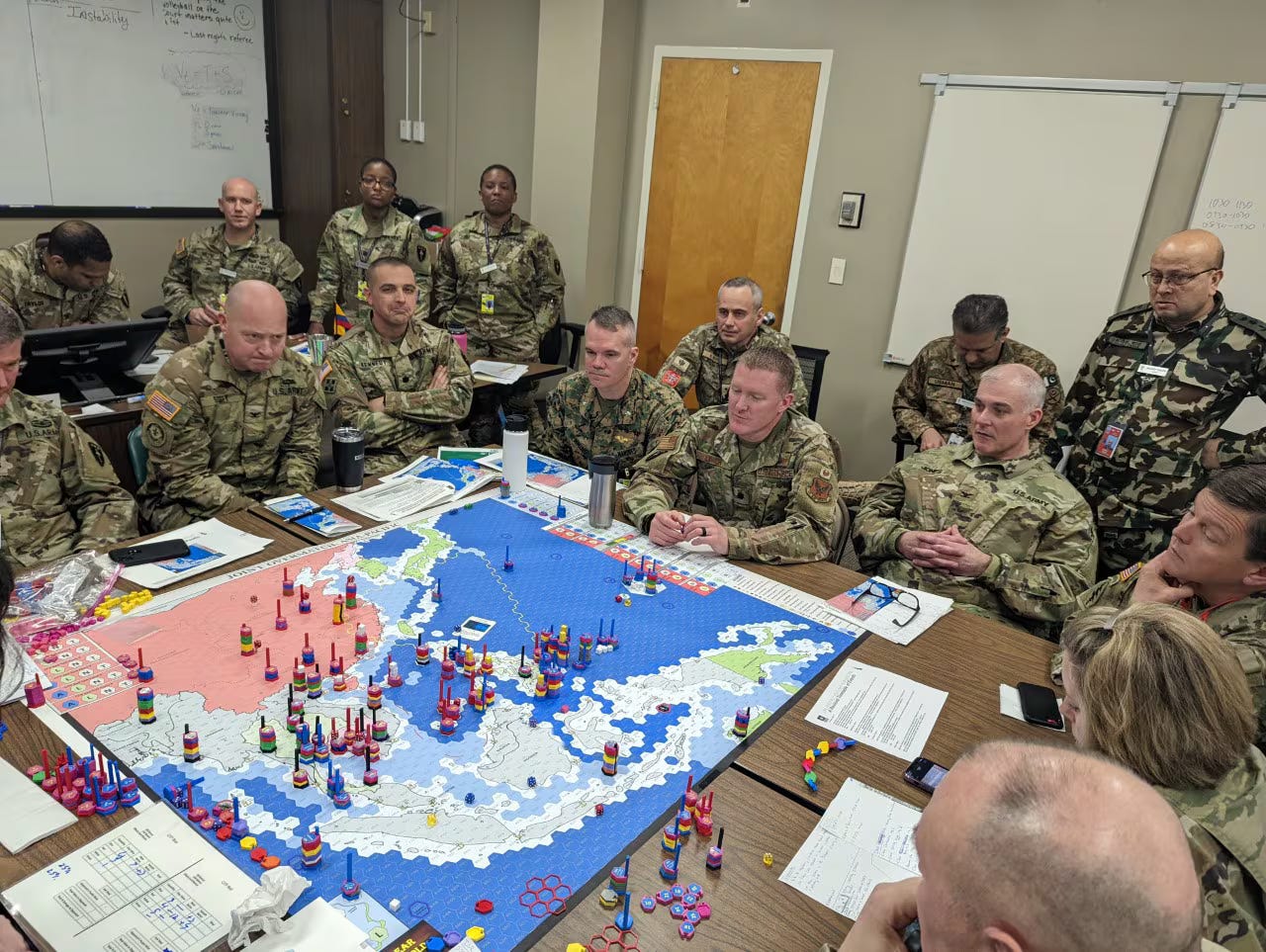
What genuinely keeps me up at night, and I mean this with the urgency of someone who spent a career studying these things so people wouldn’t have to relearn them the hard way, is not whether the bombing campaign will “work” in the narrow military sense. Of course it’ll “work” militarily. American airpower is staggeringly effective at destroying things. We are, without question, the world’s most capable practitioners of turning buildings into rubble and military hardware into scrap metal. Nobody disputes this. The question has never been whether we can blow things up. The question has always been what happens after we blow things up.
And right now, the answer appears to be: nobody knows, and an alarming number of people seem fine with that.
Iran is not Venezuela, which had a small military, a collapsed economy, and a leader who could be plucked out of Caracas in a single operation. Iran is ninety million people. It has a sophisticated military infrastructure. It has a security apparatus — the IRGC — that is specifically designed to survive decapitation strikes. It borders Iraq, Afghanistan, Pakistan, and Turkey, all of which have their own complex security dynamics that will be directly affected by whatever emerges from the wreckage. China gets significant amounts of its oil from Iran. Russia has strategic interests in maintaining Iranian stability. The Gulf states that host American military bases are already getting hit with retaliatory strikes, which tends to complicate the whole “coalition of the willing” dynamic.
And the stated objective is regime change through airpower. Which, to reiterate, has succeeded exactly zero times in the history of powered flight.
You can’t really fail out at the U.S. Army War College. It’s not a pass/fail kind of institution (more like “pass” and “pass-but-let’s-hope-that-guy-doesn’t-make-general”). However, if a stud Colonel stood up and presented a campaign plan that said “Phase One: Destroy enemy military capacity. Phase Two: See What Happens. Phase Three: Regime change and regional stability,” we might have seen the first War College failing grade. No diploma, no commencement ceremony. The professors — the PhDs with combat experience who had seen firsthand what happens when you skip Phase Two — would have sighed deeply, shaken their heads, and passed an urgent note to the dean. Phase Two is where the actual strategic thinking lives. Phase Two is where you answer the question: And then what?
Colin Powell’s Pottery Barn Rule apparently no longer applies. We’re now operating under what I can only call the Smash-and-Dash Doctrine: break everything, leave, and hope the people who live there figure it out. Hope being, as I may have mentioned, not a method.
I want to be careful here, because I’m a humor writer who happens to have a military background, not a policy analyst who happens to be funny. I don’t have access to classified briefings. I don’t know what’s being discussed in the Situation Room. It’s possible there’s a brilliant Phase Two plan that’s being kept under wraps for operational security reasons, and if so, I’ll happily eat my War College diploma on live television. Assuming I can find it.
But I’ve watched enough of these situations unfold over a thirty-year career to know what it looks like when there isn’t a plan, and it looks a lot like what I’m seeing: confident statements about military objectives, vague hand-waving about political end states, and a conspicuous absence of anyone willing to answer the question “What does Iran look like six months from now?”
The thing that’s changed, the thing that’s genuinely new and frankly a little terrifying, is the degree to which everyone seems to have accepted this ambiguity as normal.
A decade ago, the foreign policy establishment would have been in full revolt over a military campaign with no articulated end state. Think tanks would have been publishing twenty-page papers with titles like “The Day After: Planning for Post-Conflict Iran.” Congressional hearings would have featured retired generals with stern expressions saying things like “Mr. Chairman, hope is not a method.”
Instead, what I’m seeing from the serious strategic thinkers is something worse than a shrug. It’s a cacophony. The Atlantic Council published “Six Reasons Why Trump Should Choose the Military Option in Iran” and “Regime Change in Iran? Here’s Why the US Should Avoid the Temptation” within twelve days of each other, from the same institution, presumably using the same coffee machine. When the bombs actually fell, their own experts disagreed with each other in the same article, like a Yelp restaurant page where half the reviews say “life-changing experience” and the other half say “gave me food poisoning.” Policymakers can now wander into the think-tank buffet and grab whichever expert validates the decision they’ve already made, like choosing a fortune cookie before you’ve eaten the moo goo gai pan. The fire extinguishers of American foreign policy haven’t disappeared. They’ve been replaced with flamethrowers.
My X-Files poster is still on the wall. I don’t know where my War College diploma ended up. The news is on, and somebody is saying the word “unprecedented” for what I estimate is the eleven-thousandth time this year, which means it is, by definition, no longer unprecedented.
I don’t know what happens next in Iran. Nobody does. That’s kind of the point.
What I do know is that I spent a year of my life and a significant amount of the taxpayers’ money learning principles designed to prevent exactly this kind of strategic ambiguity. The doctrines aren’t wrong. They were never wrong. They were built on centuries of evidence about what happens when nations go to war without clear objectives or a realistic assessment of what comes after the shooting stops.
What’s changed isn’t the doctrine. What’s changed is that nobody seems to care about doctrine anymore. We’ve entered an era where the accumulated wisdom of military strategy, the hard-won, blood-soaked lessons of every conflict from the Peloponnesian War to Iraq, is treated as an inconvenient suggestion rather than a guiding principle.
At the War College, they taught us that the purpose of military strategy is the art of connecting military means to political ends. War is not an end in itself. It’s a tool for achieving specific, achievable political objectives. If you can’t articulate what “winning” looks like, you’re not ready to start fighting.
I keep waiting for someone in a position of authority to articulate what “winning” looks like in Iran. Not the military objectives — destroy the missiles, sink the navy, eliminate the nuclear program. Those are means, not ends. What does the political end state look like? Who governs? How? Under what framework? With what legitimacy? Backed by what force?
And here’s the big finish, the brain worm that burrows into your cerebral cortex late at night: Lately, watching all of this — the wars, the daily upheavals, the casual demolition of one institution after another — I’m starting to suspect that the question itself is obsolete. That “winning,” for the people running this, doesn’t look like stability or democracy or a negotiated peace. It looks like chaos itself. Permanent disruption as a governing philosophy. Not a bug in the system but the system working exactly as designed. The rubble isn’t a problem to be solved. The rubble is the point.
That’s not a conclusion I ever expected to reach. It’s not one they prepared me for at the War College, where we were taught that war serves politics and politics serves order.
Hope, I was taught, is not a method.
Apparently, they’ve updated the curriculum.
I think I’d like a refund.