
Profiles: Prophets or Madmen?
The Mind-bending World of Philip K. Dick

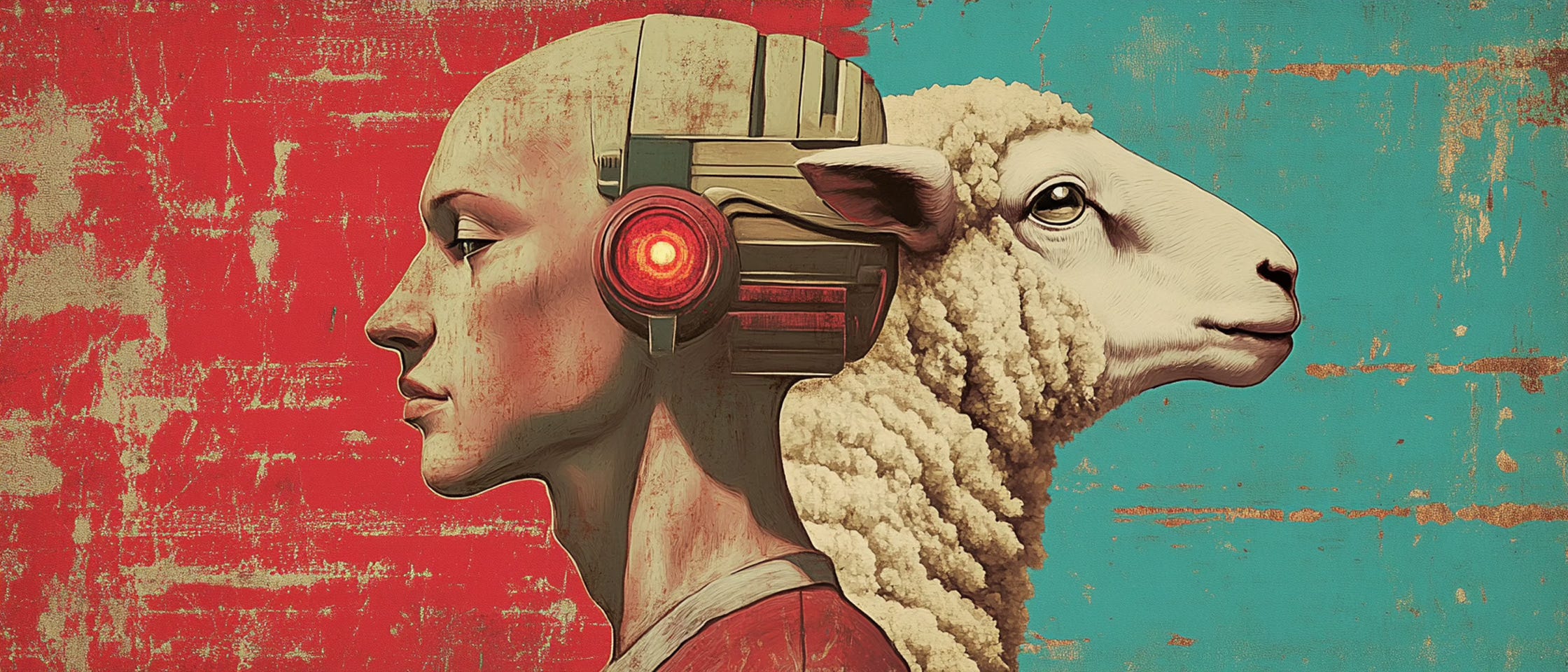
I still remember the exact moment reality fractured for me: On a rainy mid-winter Wednesday night, age 21, Camp Red Cloud, Uijeongbu, South Korea. I was stationed at (what was then) a small, isolated joint military base an hour north of Seoul, and halfway through the base-library copy of Philip K. Dick’s 1969 masterpiece UBIK. The librarian, Mr. Kim, looked as if he’d been quietly running things there since the end of the Korean War. Over the course of that year, Mr. Kim had reliably introduced me to the great classics of science-fiction: Heinlein’s Stranger in a Strange Land, Asimov’s Foundation Series, and of course Frank Herbert’s Dune. So when he held out a dog-eared copy of Dick’s UBIK, I snatched it up and ran back to my luxurious 10’x14’ Officer Quarters and started devouring it. By morning, the world I’d inhabited pseudo-confidently for over two decades suddenly seemed about as substantial as tissue paper held to light. What if my alarm clock wasn’t actually ringing? What if reality itself was just another carefully constructed illusion? This wasn’t just a reading experience—it was a sci-fi Da Vinci Moment: my disparate threads of consciousness suddenly wove together to reveal that reality might not be exactly what I’d been sold.
If you haven’t experienced UBIK, it’s about a world where reality itself is unstable—constantly decaying and shifting backward in time. The story follows Joe Chip, a debt-ridden technician working for an anti-telepathic security firm, who discovers that what he perceives as reality might be a shared hallucination experienced in the half-life state after death. As his world begins deteriorating around him—modern technology reverts to primitive forms, food spoils instantly, and mysterious messages keep appearing—Joe and his colleagues desperately search for UBIK, a mysterious substance that might stabilize their disintegrating reality. It’s a perfect introduction to Dick’s obsessions: the fragility of consciousness, corporate control, the nature of reality, and the terror of entropy—all wrapped in a darkly comedic package that somehow remains both accessible and profoundly unsettling. This isn’t lightweight space opera stuff—it’s literature of the highest order. Time magazine included UBIK among their “All-TIME 100 Greatest Novels” of the modern era. Literary critics increasingly acknowledge Dick alongside Kafka and Borges as masters of the surreal
and philosophical.
Six Degrees of PKD: From Pulp Fiction to Philosophical Prophet
For the uninitiated, PKD might seem like just another science fiction writer, but for those who dismiss science fiction as mere escapism about spaceships and aliens, he offers something uniquely different: a looking glass reflecting our deepest anxieties about what it means to be human in an increasingly technological world. His stories don’t just predict our future; they dissect our present with surgical precision.
PKD’s cultural footprint stretches far beyond the genre’s boundaries. Hollywood has mined his bibliography repeatedly, transforming his mind-bending stories into blockbusters like Total Recall (We Can Remember It for You Wholesale), Minority Report, The Adjustment Bureau, A Scanner Darkly, Paycheck, Next (from The Golden Man), and the granddaddy of cinematic sci-fi Blade Runner (from Do Androids Dream of Electric Sheep?). His influence continues in TV with The Man in the High Castle, Philip K. Dick’s Electric Dreams, and Minority Report series adaptations. Even The Truman Show, while not a direct adaptation, bears his philosophical fingerprints.
The most striking aspect of falling down the PKD rabbit hole isn’t just the mind-bending narratives, but how his paranoid premonitions keep materializing in our daily newsfeeds. Each morning brings another headline—deepfakes manipulating reality, algorithms curating our perception, corporations harvesting our data—that reads like a plot point from one of his fever-dream novels. I’ve spent countless late nights wondering: was Dick actually receiving transmissions from the future, or was he simply more clear-eyed about technology’s trajectory than the rest of us?
Look, I’m not going to sugarcoat this: reading Philip K. Dick will ruin you. Not in the way bad sushi ruins your evening, but in the way seeing the Grand Canyon ruins every postcard you’ve ever received. Once you’ve experienced his fractal-like storytelling, where realities nest within realities like Russian dolls, conventional fiction feels like training wheels on a rocket ship.
Dick offers readers the ultimate Da Vinci Moment—that instant when seemingly disconnected observations about technology, consciousness, and reality suddenly crystallize into a single, terrifying insight: what if everything we experience is just an elaborate simulation designed to keep us complacent while something else entirely happens behind the scenes?
“Reality is that which, when you stop believing in it, doesn’t go away,” Dick famously wrote—a deceptively simple observation that reveals the philosophical depths beneath his pulp fiction exterior. These weren’t just clever thought experiments. Dick lived his paradoxes, experiencing what he described as mystical revelations in 1974 that informed his later work.
Behind the philosophical fireworks was a man wrestling with profound personal demons. Dick struggled with mental health issues, reported paranoia about government surveillance (sometimes justified), moved through five marriages, and battled substance dependency while producing novels to pay the bills. He believed an intelligence he called VALIS (Vast Active Living Intelligence System) beamed pink light into his consciousness, revealing we’re all living in a “Black Iron Prison” of false reality. Hallucination? Religious experience? Creative wellspring? His final novels explored these events in a semi-autobiographical trilogy that blurs the line between memoir and science fiction. These very struggles gave him unique insight, allowing him to see through society’s comfortable illusions with unparalleled clarity.
While Dick was furiously typing these reality-shattering narratives to pay the rent, mainstream America was watching “Leave It to Beaver” and embracing suburban conformity. The same culture that celebrated picket fences and technological optimism also produced its perfect counterpoint: a meth-fueled prophet penning warnings about where all this “progress” might actually be leading us.
In our age of deepfakes, data harvesting, and reality manipulation through algorithms, Dick isn’t just relevant—he’s essential. He diagnosed our current philosophical condition decades before the symptoms became undeniable.
New to Dick’s work? Your entry point depends on your literary preferences. Literary fiction readers might start with The Man in the High Castle, his alternate history masterpiece. Philosophy lovers should dive into the laugh out loud, mind-bending UBIK or The Three Stigmata of Palmer Eldritch. Film enthusiasts might begin with Do Androids Dream of Electric Sheep? (the basis for Blade Runner). Short story aficionados should pick up Minority Report and Other Stories. Whatever your starting point, prepare to have your perception permanently altered.
So set down that algorithm-recommended beach read, step away from your digital tracking devices (they’re listening anyway), and make a pilgrimage to your local used bookstore. Find that yellowing paperback with the psychedelic cover and questionable font choices. The uncomfortable truth awaits between those dog-eared pages: Philip K. Dick wasn’t writing science fiction—he was sending us urgent dispatches about our present from a past that understood our future better than we understand our now. The rabbit hole beckons, and curiouser and curiouser things are about to unfold… Just don’t forget your orange marmalade... or your tinfoil hat. ∞