

If you’re over 49½, at some point in the past year, someone close to you made a joke about our horrific mid-century love affair with Jell-O salads. I say 49½ because the turning point roughly seems to be sometime in 1976, right after the Bicentennial, when the ubiquitous Jell-O Salad phase of American history came to an abrupt end.
Soon we’ll be celebrating our 250th anniversary as a country— our Semiquincentennial, which means we’re well on our way to making America great again—and I realized: this just may be the moment we’ve all secretly been thinking about since 1976—restoring Jell-O salad to our national diet!
My own particular gelatinous nightmare often features my mom’s infamous Jello Cabbage Salad—think coleslaw meets Jell-O, sans Miracle Whip (or not…). It contained vegetables that had no business being suspended in gelatin, as if someone had captured a vegetable garden mid-explosion and frozen it in time using chemicals developed by people who clearly hated vegetables.
“It’s Salad,” my mom announced, with the confidence of someone who had not just committed a culinary war crime. “Eat up!”
The recipe, which I would later learn she got from a source she “couldn’t remember” (a common phenomenon with jello salad recipes, as if they materialized fully formed from the collective unconscious of 1950s homemakers), called for lime Jell-O, shredded cabbage, grated carrots, crushed pineapple, and a dose of regret. The ingredients were not combined. They were suspended. Like evidence. Like bodies. Like insects trapped in amber. Like the food equivalent of Han Solo frozen in carbonite, except Han Solo probably tasted better.
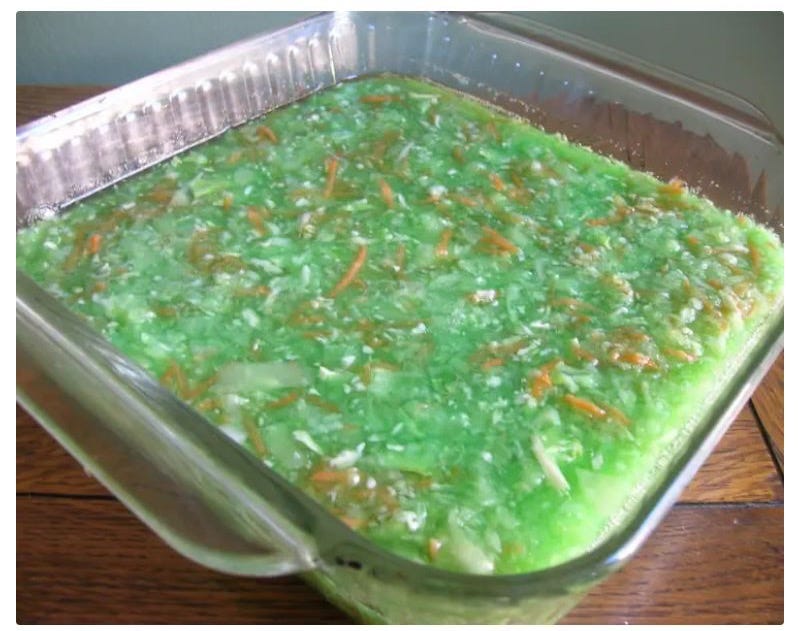
I ate it, because I was a child and had no choice in the matter. It tasted like a lawn mower had achieved sentience and decided to become a side dish.
Years passed. I grew up. I got married. I thought I was safe.
Then one Thanksgiving, my wife—whom I trusted, whom I loved, who had seemed like a rational human being capable of making sound decisions—emerged from the kitchen carrying a dish that can only be described as “ominous.” It was red. It jiggled. It had layers.
“Sour Cream Cranberry Jell-O Salad,” she said, beaming. “It’s a family recipe.”
Reader, I married her anyway.
But here’s the thing nobody wants to admit, the secret we’ve all been keeping from ourselves as we smugly order our deconstructed kale Caesar salads and our artisanal avocado toast: We need to bring Jell-O salads back.
Not ironically. Not as a joke. I’m talking full-scale Jell-O Salad Revival, with capital letters, like a religious movement, which frankly it might need to be because you’re going to need faith—serious, unshakeable, leap-off-a-cliff faith—to convince people that suspending food in gelatin is something humans should do on purpose.
THE GOLDEN AGE OF GELATINOUS TERROR
Now again, if you’re under 49 ½, you need to understand that there was a time—roughly 1950 to 1975—when Americans believed that anything could and should be turned into a gelatin mold. This was not a fringe belief. This was mainstream culinary philosophy, printed in actual cookbooks, sold in actual stores, to actual people who took this information home and acted on it.
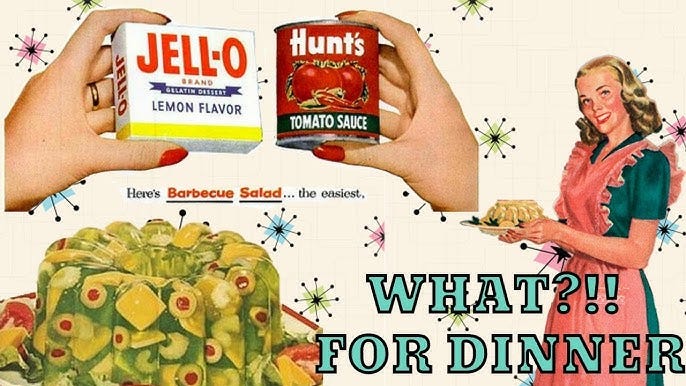
I have done the research. By which I mean I fell down a rabbit hole of vintage recipe cards on the internet, and I need you to understand: the Lime Jello Cabbage Salad was tame. That was the reasonable one.
There were jello salads containing:
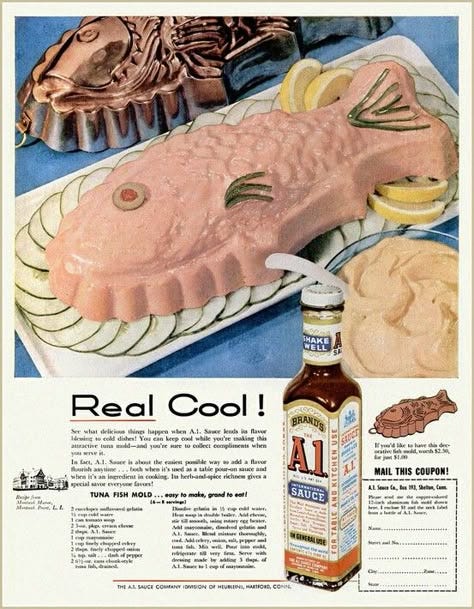
Tuna fish (cold, gelatinous tuna)
Hot dogs (suspended like little meaty specimens)
Cottage cheese (which is already borderline aggressive as a food)
Olives, ham, celery, and “salad dressing” in something called “Perfection Salad,” which is either the greatest lie in food history or the darkest example of irony
Tomato aspic with shrimp, which sounds like something you’d threaten someone with during enhanced interrogation
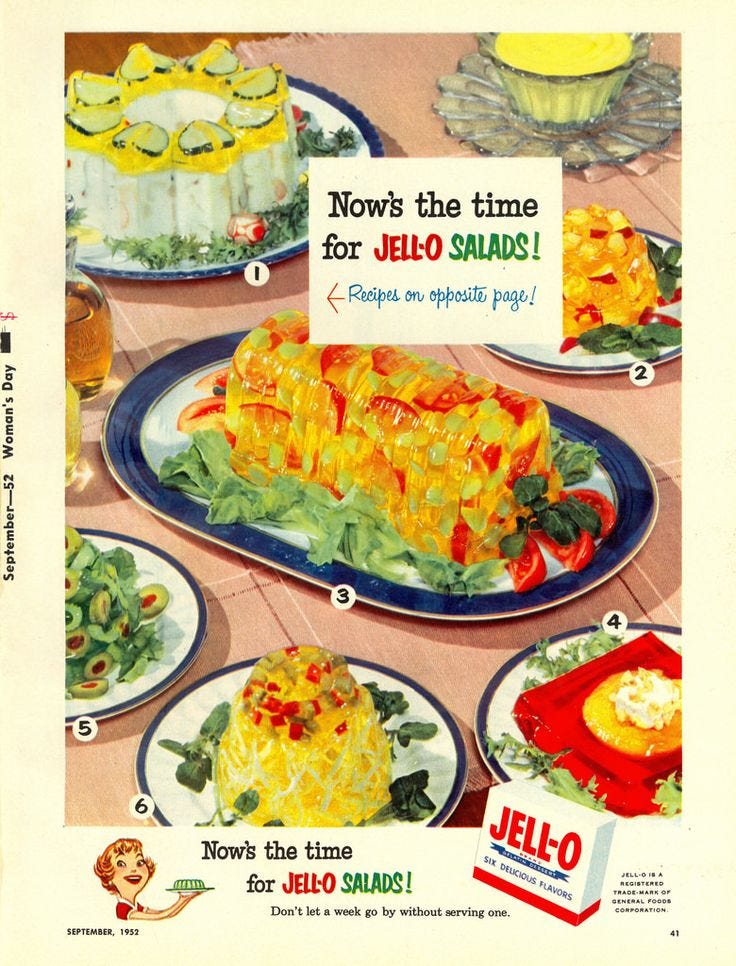
The photographs accompanying these recipes show them displayed on fancy plates, garnished with lettuce, as if presentation could somehow distract from the fundamental wrongness of what was happening. It’s like putting a bow on a crime scene.
But here’s what gets me: People made these. Enthusiastically. At dinner parties. For company. These weren’t desperate Depression-era survival foods. These were fancy. Women’s magazines ran full-color spreads showing elaborately molded salads that looked like architecture projects undertaken by someone who had deeply misunderstood the assignment.
Jell-O was marketed as sophisticated. Elegant. Modern. The company published entire cookbooks dedicated to convincing American homemakers that what their families really needed was more gelatin in their lives. One ad from 1952 shows a hostess serving a shimmering green ring mold to admiring dinner guests while the tagline promises “New! Exciting! Jiggly!”—three adjectives you desperately hope the ad men weren’t using as innuendo.
THE EXPERIMENT
In the interest of journalism (and because my therapist said I need to “confront my past”), I decided to host a proper midcentury dinner party. Not as a joke. As a legitimate test of my theory that these foods deserve resurrection.
First, I had to make the Lime Jello Cabbage Salad myself. The recipe I found online—submitted by someone named “Pam-I-Am,” which sounds suspiciously like an unpublished Dr. Seuss book about questionable life choices—came with this description: “This Jello salad is a tradition in our family to serve with ham or pork.”
Let’s pause there. “Tradition in our family.” This is what we’re talking about. Jello salads aren’t just recipes. They’re legacy. They’re passed down. They’re the fruitcake of the salad world, except people actually ate jello salad, which somehow makes it worse.
The recipe calls for:
1 box lime Jell-O (ominous start)
1 cup shredded cabbage (why)
1/2 cup grated carrots (no)
1 cup crushed pineapple with juice (stop)
The instructions are deceptively simple. Dissolve the Jell-O in hot water. Add ice to cool it down. Wait until it’s “partially set” (a phrase that should never apply to food). Fold in the vegetables.
I need you to understand what “fold in the vegetables” means in this context. You are taking cabbage—raw cabbage, the thing people put in coleslaw because they hate themselves—and you are gently incorporating it into lime gelatin. Like you’re being tender with it. Like you’re tucking it into bed.
The mixture goes into a dish and refrigerates for two hours “until firm.”
“Firm” is doing a lot of work in that sentence.
What emerges looks like something you’d find in a petri dish in a laboratory studying the effects of radiation on produce. It’s green. It’s translucent. There are vegetable shapes visible inside it, like a very unappetizing aquarium. When you cut into it, it makes a sound. Not a good sound. A sound like “squoilch,” which isn’t even a real word, but your brain invents it immediately because English has failed us in this moment of culinary crisis.
The full dinner party menu:
Lime Jello Cabbage Salad (the cornerstone of my trauma)
Sour Cream Cranberry Jell-O Salad (my wife’s contribution to the madness)
Tuna noodle casserole with potato chip topping
Green bean casserole with cream of mushroom soup and French’s fried onions
Tang (served in actual glassware, not Solo cups, because we’re classy)
Pineapple upside-down cake
Dress code: “Hawaiian Shirts and Bermuda Shorts”
Entertainment: Any vinyl album by Harry Belafonte singing Calypso music.
Atmosphere: Aggressively beige
The guests arrived skeptical. They became more skeptical when they saw the jello salads, which I had unmolded onto lettuce leaves (because that’s what you DO with jello salads) and garnished with mayonnaise. Yes, mayonnaise. Pam-I-Am’s recipe said to. I was being authentic, which I now realize was less “Dr. Seuss character” and more “cry for help.”
I served portions. I explained nothing. I watched.
Their reactions progressed through the five stages of grief:
Denial: “That’s not actually a salad.”
Anger: “Why would you do this?”
Bargaining: “If I try it, can I leave?”
Depression: [chewing silently, staring into middle distance]
Acceptance: “My grandmother made this.”
That last one is key. Because here’s what happened next: People ate it. And not just polite “I’ll try one bite” ate it. They went back for seconds. Of jello salad. With vegetables in it.
Why? Because nostalgia is a hell of a drug, and apparently when you inject it directly into the taste buds, people will eat anything. I watched rational adults, people with college degrees and 401(k)s, go back for seconds of cabbage Jell-O. This is the same psychological phenomenon that makes people think their high school was better than kids have it today. It wasn’t. We had Jell-O salad.
Every single person at that table had a story about Jell-O salad. Someone’s grandmother made all of these. Every single bewildering jello salad recipe represents somebody’s childhood. Somebody’s Thanksgiving. Somebody’s “remember when Grandma made that weird green thing and Grandpa said it was good even though we all knew he was lying because he loved her.”
Jello salads weren’t good, exactly. They were familiar. They tasted like childhood. Like church basements and wedding receptions and funeral luncheons. Like a specific time and place in American history when people believed that if you could put something in Jell-O, you should.
The tuna noodle casserole was unironically delicious, which several guests seemed personally offended by. The green bean casserole—which never actually went away but has been relegated to “Thanksgiving only” status—was universally praised. The Tang generated significant debate about whether it was better or worse than we remembered. (Several people described it as “aggressively orange,” which is the only way to describe Tang.)
The pineapple upside-down cake was perfect because pineapple upside-down cake is objectively always perfect and I will fight anyone who disagrees.
By the end of the evening, everyone was Googling where to buy fondue sets.
MY FOUR RULES FOR CULINARY RESTORATION
Based on this empirical evidence—which is definitely scientific and not at all just my friends being polite—I have established four personal rules for bringing back midcentury food culture:
RULE ONE: The Jell-O Salad Mandate
I will bring a gelatinous salad to at least one potluck per year. Not as a joke. As a legitimate offering. With tiny marshmallows, if appropriate. I will present it with a straight face. I will not apologize. I will watch as people remember their grandmothers and experience the complex emotions that come with eating cabbage suspended in lime gelatin. This is my gift to them. They’re welcome.
RULE TWO: The Company Food Doctrine
I am reinstating the concept of “company food”—recipes you only make when people come over. Not because guests deserve special punishment, but because there was something weirdly wonderful about having fancy recipes reserved for occasions. Recipes involving cream of mushroom soup and fried onions from a can. Recipes your mother got from her mother, who got them from a magazine, who got them from a test kitchen run by people who were definitely making things up as they went along. I’m talking tuna noodle casseroles. I’m talking green bean casseroles. I’m talking about foods that require the phrase “cream of” before a vegetable name.
RULE THREE: The Heritage Recipe Preservation Act
I am keeping every questionable recipe my mother, my wife, my wife’s mother, and random people named Pam-I-Am have ever made. I will preserve them. I will make them occasionally, with full knowledge that they’re objectively questionable. I will serve them to my children. Because trauma is an heirloom, and heirlooms are meant to be passed down. This is heritage. This is America.
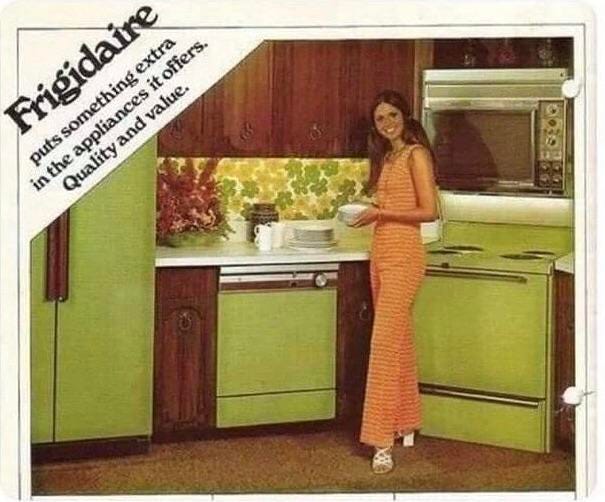
RULE FOUR: The Matching Appliance Renaissance
Lastly, all kitchen appliances must be available in avocado green and harvest gold. Not as “retro options.” As the PRIMARY options. Stainless steel is banned. It is too modern. Too sterile. Too lacking in whimsy. We will return to a time when refrigerators had personality, even if that personality was “aggressively 1970s color palette.”
I’m also bringing back fondue, but that’s less a rule and more a personality defect.
THE CONCLUSION (OR: WHY TRAUMA IS AN HEIRLOOM)
Look, I’m not actually suggesting we return to a time when people earnestly served ham suspended in gelatin. I’m not advocating for the wholesale abandonment of culinary progress. Knowing how to make risotto is good. Access to fresh herbs is good. Understanding that vegetables can be roasted instead of boiled into submission is very good.
But there’s something weirdly beautiful about these forgotten foods. They represent a specific moment in American culinary history when we had access to processed ingredients and leisure time and matching kitchen appliances in avocado green, and we thought we were living in the future. We thought Jell-O salads were sophisticated. We thought TV dinners represented progress. We believed Tang was the drink of tomorrow.
We were wrong, but we were optimistically wrong. We were experimentally wrong. We were wrong with enthusiasm.
And yeah, the results were often disgusting. Jello salads are objectively bad. Tang tastes like oranges have a personal vendetta against you. Most fondue parties probably ended with someone getting second-degree burns.
But these foods are part of our story. They’re what our grandparents ate. They’re what our parents rebelled against by learning to make quiche. They’re what we mock now while secretly wondering if maybe, just maybe, we’ve lost something by completely abandoning the earnest weirdness of midcentury cuisine.
So I’m keeping the recipes. The Lime Jello Cabbage Salad. The Sour Cream Cranberry Jell-O Salad that my wife makes with inexplicable pride. The various casseroles that require cream of mushroom soup and fried onions. All of them.
Not because they’re good. But because someday my kids need to understand what their grandmother put me through.
My kids are all adults now. They don’t know about jello salads yet. Two of them adamantly believe vegetables are God’s punishment for video game addiction. One still believes vegetables come from the farmers market and are supposed to taste like themselves, not like they’ve been imprisoned in lime gelatin. They’re innocent. They believe in a just and semi-rational food world.
They have no idea what’s coming.
Because someday—maybe at Thanksgiving, maybe at a family reunion, maybe just on a random Tuesday when I’m feeling particularly committed to this generational cycle of culinary trauma—I’m going to make Lime Jello Cabbage Salad. I’m going to put it on a nice plate. I’m going to garnish it with lettuce and maybe some shredded carrots that aren’t encased in gelatin, just to really highlight the contrast.
And I’m going to serve it to them with a completely straight face.
They’re going to ask what it is.
I’m going to say, “It’s salad. Eat up!”
They’re going to look at me like I’ve betrayed everything they thought they knew about our relationship.
Which, you know, fair.
But they’ll eat it. Because they love me, and because children are contractually obligated to eat the questionable foods their parents serve them, just as I ate the questionable foods my mother served me, just as my mother ate the questionable foods her mother served her.
This is heritage. This is how traditions survive. This is how a nation of people who should absolutely know better ends up with cabbage in their Jell-O.
Welcome to America. Have some lime gelatin. I promise it’s a salad.
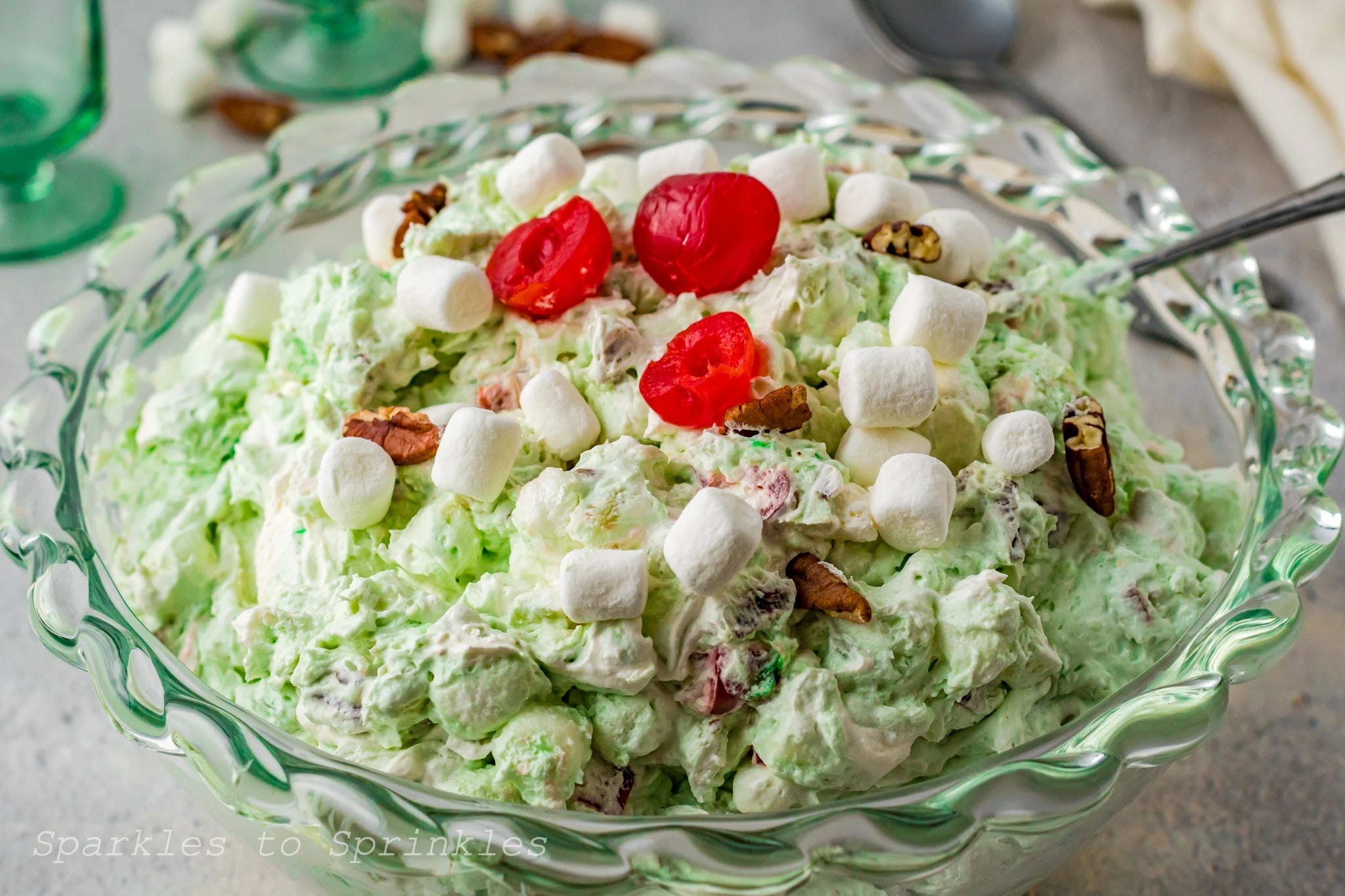
And hey, if you’re looking for dessert, I know a great recipe for Watergate Salad. It has pistachio pudding in it. And Cool Whip. And marshmallows.
It’s delicious.
My mother-in-law gave it to me. She can’t remember where she got it.
I’m starting to think that’s intentional.
This article comes at the perfect time, just as I was contemplating how certain cultural artifacts, even culinary ones, get archived and remembered. Your vivid description of that gelatinous nightmare is brilliant, though I'm not convinced our current societal 'algorithms' are prepared for such a controversial re-introduction without a lot of debugging.
someone at food network needs to read this and make a competition show involving jello!!!!
great writing, especually for gen x. 😆💚