
The Egyptian Book of the Dead
It's TripAdvisor for the Afterworld

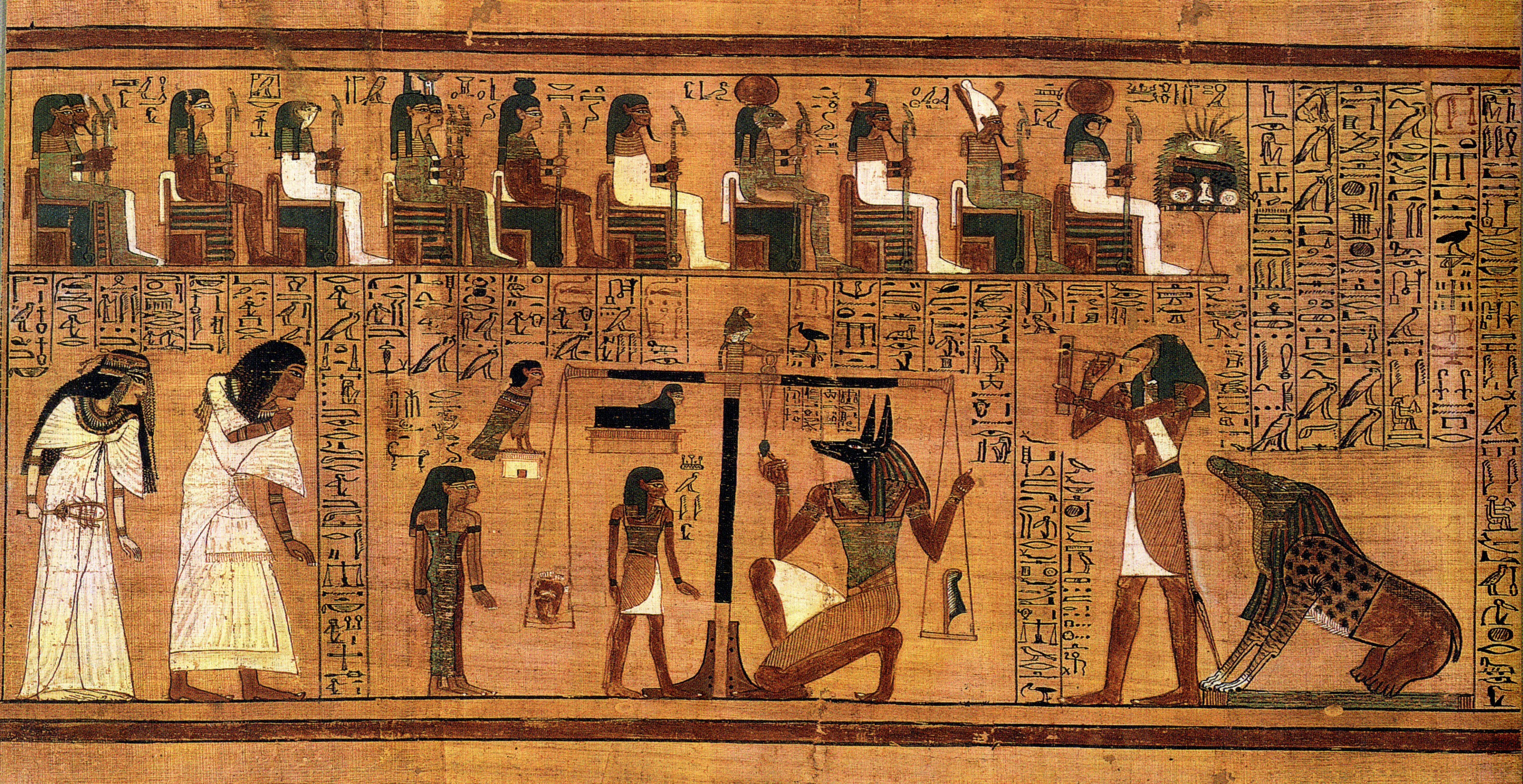
This spectacular image was recorded over 3,275 years ago. It’s part of a 78-foot scroll inscribed with funerary rites and spells the ancient Egyptians used to navigate the bureaucratic nightmare of the afterlife. Incredibly, it still survives intact today at the British Museum, known as the Papyrus of Ani. And it’s a story worthy of its very own rabbit hole.
The scene depicts a recurring afterlife ritual: the Weighing of the Heart ceremony in the Hall of Judgment. In the center, a golden balance holds two pans—a human heart on the left, a single white feather on the right. The jackal-headed god Anubis steadies the scale while the ibis-headed scribe Thoth stands ready with his pen to record the verdict.
The heart of the deceased is being weighed against the feather of Ma’at to determine his worthiness for the afterlife. The feather represents truth and justice. And there, lurking nearby, is Ammit—part crocodile, part lion, part hippopotamus—waiting to devour the heart if it proves too heavy with sin.
On the left, a man and woman in whte linen pray. This is Ani, a royal scribe of Thebes, and his wife Tutu, hoping his heart weighs no more than a feather. Above them, forty-two deities sit in judgment.
If you’re contemplating this fascinating ritual, you might be slightly disappointed when compared to the Hollywood version. Pop culture has left us with a terribly skewed image of the Egyptian Book of the Dead. Thanks to movies like The Mummy, most of us imagine it as a single, forbidden tome bound in human flesh, capable of raising armies of the undead. The reality is far more intresting.
The Book of the Dead wasn’t a book at all—it was a collection of customizable funerary texts that evolved over 1,500 years. No two copies were identical. Wealthy Egyptians commissioned personalized versions, selecting spells they believed would help them navigate the afterlife’s gauntlet of gates, demons, and divine tribunals. Think of it as your own personal guidebook to the heavenly afterlife, tailored to your specific fears and budget.
The Egyptians didn’t even call it “The Book of the Dead.” Their name: Ru-Nu-Peret-em-Heru—”Spells for Going Forth by Day.”
So who was Ani, the man whose heart we see being weighed? He was no pharaoh. Around 1250 BCE, he was a bureaucrat managing temple revenues as Royal Scribe and Overseer of the Granaries. But he clearly understood the value of a good insurance policy. His 78-foot papyrus scroll—the longest known from the Theban period—represents a massive investment in his eternal future.
Here’s where it gets fascinating: much of it wasn’t originally written for Ani at all. Like a savvy ancient Egyptian shopper, he purchased pre-made sections with blank spaces for names. A scribe then hastily filled in “Ani” throughout, sometimes forgetting proper spacing, occasionally writing his name twice in the same sentence. Only the first 16 feet were custom-written expressly for him. The rest? Off-the-rack eternity from the local scroll shop.
But what were all these spells actually for? The spells themselves reveal what truly terrified the ancient Egyptians about death. These weren’t dark incantations for raising the dead—they were survival manuals addressing deeply practical (and sometimes bizarre) anxieties:
Transformation spells allowed the deceased to become a falcon, lotus flower, or even a god—maintaining agency when your physical body was stuck in a tomb forever. Protection spells prevented your heart from testifying against you during judgment. The Egyptians believed your heart held your conscience and memory and could betray you at the worst possible moment. Anti-indignity spells ensured you wouldn’t be forced to walk upside-down or eat excrement in the underworld. The Egyptians were obsessed with maintaining dignity even in death. Navigation spells provided passwords for underworld gatekeepers. Wrong answer? No passage. And critically, anti-death spells prevented dying a second time. The “second death” meant complete obliteration—your name forgotten, your soul devoured. No resurrection. No second chances.
Which brings us back to the scene above, where Ani faces his ultimate test. The Egyptians believed hearts grew heavier with each sin—lies, theft, murder, cruelty. If his heart outweighs Ma’at’s feather of truth, Ammit devours it and Ani ceases to exist. To pass, he must recite the “Negative Confession” to the 42 divine assessors: “I have not killed. I have not stolen. I have not caused pain. I have not made anyone weep.”
If convincing, he enters the Field of Reeds—an idealized eternal Egypt where he’ll farm, feast, and live forever with Tutu by his side.
It’s easy to see why Hollywood reinvented the Book of the Dead. Screenwriters needed a MacGuffin—that dangerous object to drive plots. A personalized scroll with self-help spells for navigating divine bureaucracy just doesn’t have the same punch as a dangerous tome that resurrects the dead.
But the real Book of the Dead is something quieter and more human: a desperate attempt to cheat oblivion by people who believed that with the right spells, correct passwords, and a heart as light as a feather, death didn’t have to mean the end. - ∞
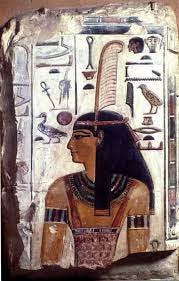
Ma’at and the Feather of Truth
I recently had the opportunity to view this amazing 3,000-year-old relief of the goddess Ma’at at The Met’s Divine Egypt exhibit (a must see).
Ma’at was the ancient Egyptian concept of truth, justice, cosmic order, and balance—personified as a goddess wearing an ostrich feather in her headdress. She represented everything that kept chaos at bay: honest dealings, fair governance, and harmony with the natural world.
In the afterlife, this principle became literal judgment. The deceased’s heart was weighed against Ma’at’s feather in the Hall of Two Truths. If the heart was unburdened by wrongdoing and balanced against Ma’at’s feather, the deceased could enter the Field of Reeds, an eternal paradise. If it was heavy with sin, the heart was devoured by Ammit, a chimeric demon. This was the “second death”—complete annihilation.
The feather’s symbolic power has endured in modern culture. If you’re a Zeppelin fan, you’ll recognize it as Robert Plant’s personal symbol from Led Zeppelin IV—the untitled 1971 album that gave us “Stairway to Heaven.” Plant chose Ma’at’s feather to represent truth and his role as lyricist. - ∞