The Lost Orchard
America's Apple Apocalypse

Maybe it’s the crisp chill in the air, or the promise of drinking cider around a fire on a cold autumn night, but Fall always gets me thinking pomologically. And if you’d stumbled into the coolest rabbit hole archive on the face of the planet, you just might be pomologically inclined too!
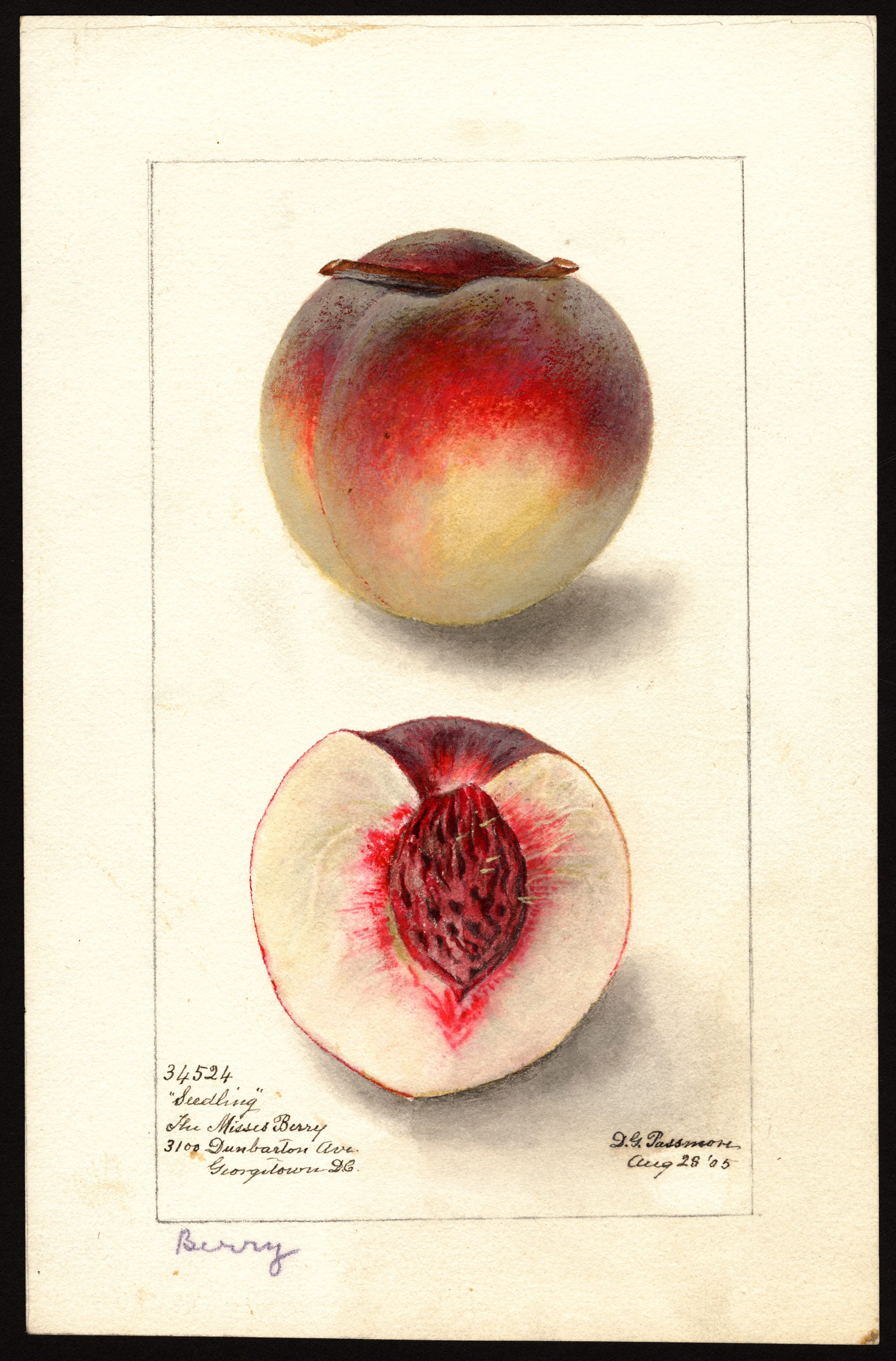
I’m referring to, of course, the USDA Pomological Watercolor Collection. Let me explain: It’s 1894 and the United States government has just commissioned an army of watercolor artists to paint every species of fruit in America. Not because bureaucrats were suddenly craving fruit art, but because nobody had invented Instagram yet and they needed some way to document thousands of different fruit varieties scattered across the continent before they disappeared forever.
Spoiler alert: most of them disappeared anyway.
Link: The USDA Pomological Watercolor Collection
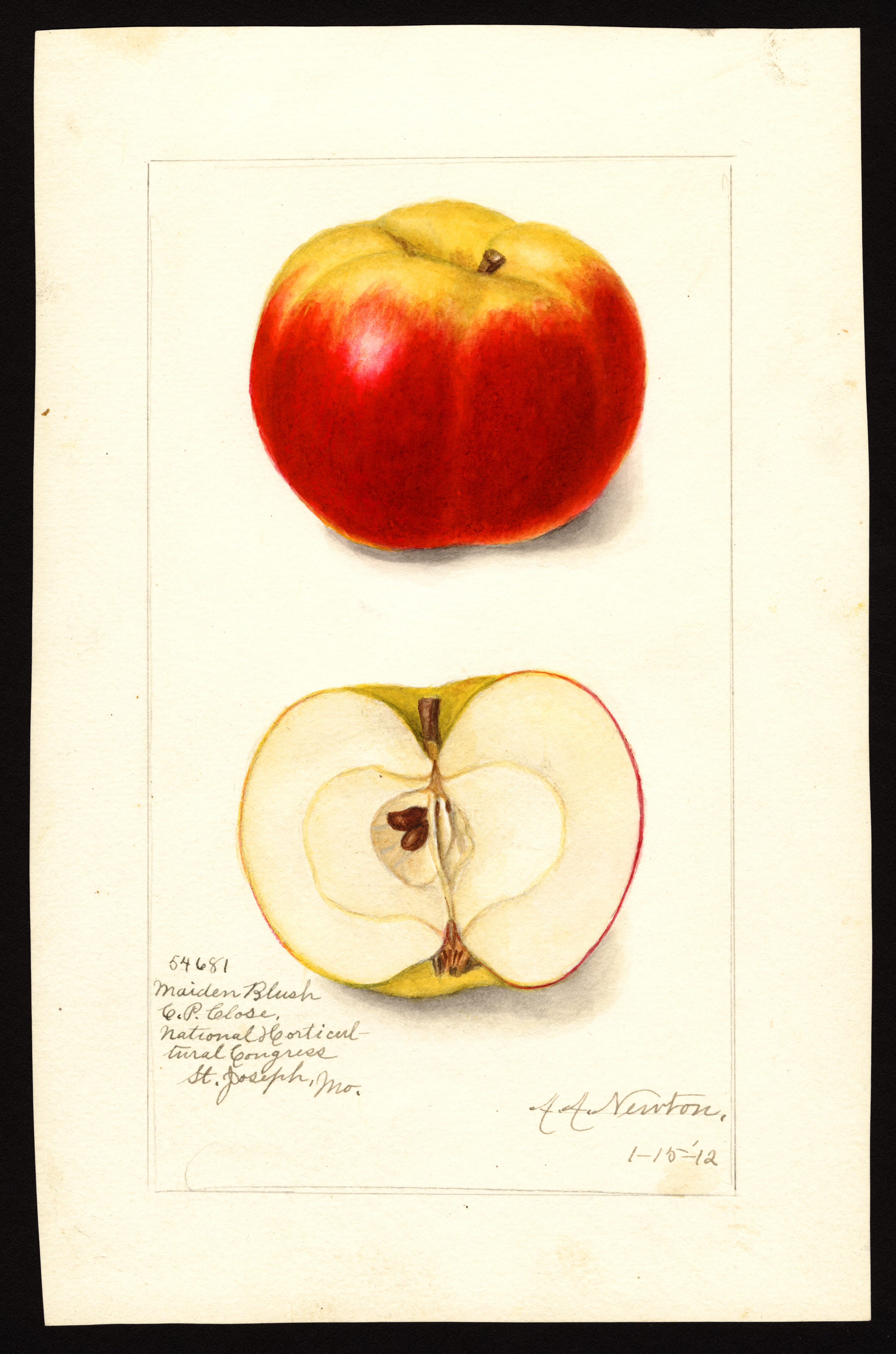
Enter the USDA: between 1886 and 1942, the Department hired 21 artists to create 7,497 exquisitely detailed paintings documenting fruit and nut varieties—including 3,807 images of apples alone—with names that sound more like Victorian romance novels than agricultural specimens. The collection includes apples with poetic appellations like “Maiden’s Blush,” “Winter Banana,” and “Cox’s Orange Pippin” (because even before TikTok, orchard owners were looking for branding).
But here’s the part that should make you pause mid-bite of your Honeycrisp: once upon a time, North America hosted approximately ~17,000 named apple varieties. Today, there are only ~7,500 “cultivars” (that’s pomological shorthand for cultivated varieties) worldwide, with North America home to roughly ~2,500 of those varieties (depending on who you talk to). Think about it: If you ate a different American variety everyday, it would take you almost seven years to try every one. Unfortunately, while the U.S. actively grows about 100 different apple varieties, just 15 of those account for 90 percent of U.S. apple production. That’s roughly the agricultural equivalent of replacing the entire works of Shakespeare with a handful of juicy haikus and a few tart limericks. So if you wanna expand your apple portfolio, you gotta dive down the rabbit hole...
America’s orchards were once an agricultural library. The period between 1886 and 1916—when most of these watercolors were painted—was when major fruit-producing regions in the United States were just beginning to emerge. This wasn’t just about documenting pretty pictures for government files; it was agricultural CSI work. Photography wasn’t yet in widespread use as a documentary medium, so the government relied on artists to produce technically accurate drawings of cultivars for its publications. Every painting had to capture not just beauty but scientific precision—showing cross-sections, disease damage, and even the exact curve of a stem.
The artists behind this massive undertaking deserve their own rabbit hole entirely. Some 21 different artists contributed to the collection, of whom a third were women—working as a government illustrator was one of the few artists’ jobs open to women at a time when they were just beginning to access formal training in American art schools. The collection’s stars included Deborah Griscom Passmore, Amanda Almira Newton, and Mary Daisy Arnold, who each painted over 1,000 watercolors.
Passmore, in part-icular, deserves recog-nition as America’s unsung botanical Monet. Her watercolors have been called the finest done by the early USDA illustrators and a national treasure. She spent decades painting apples with the kind of obsessive detail usually reserved for Dutch still life masters, except her subjects were destined for government reports rather than museum walls.
So what happened to all those varieties? The same thing that happens to most beautiful, diverse things when industrialization arrives: they got efficiently eliminated in favor of a few “practical” options. It was a veritable apple apocalypse.
By the mid-20th century, approximately 11,000 heirloom varieties of apple no longer existed. Like many heirloom apples, varieties vanished with the rise of popular supermarket varieties like the Red Delicious, Gala, Fuji, etc. It’s sorta like the agricultural equivalent of replacing thousands of local newspapers with the social media formerly known as Twitter.
The reasons were predictably practical: commercial farming required apples that could survive shipping, looked appealing under fluorescent lights, and had shelf lives measured in months rather than weeks. Flavor became negotiable. Genetic diversity became a luxury we apparently couldn’t afford.
In 1800 the notion of the selected apple variety and the grafted tree was still rare in Maine, but farm families wanted winter storage apples for their root cellars. Every observant farmer was a potential apple breeder—and not just in Maine. From Fort Kent to Georgia and out to the Mississippi River, farmers were selecting, naming and passing around apples. Each variety represented decades of careful selection, local adaptation, and accumulated knowledge about what grew well in specific microclimates and soils. When we lost those varieties, we didn’t just lose fruit—we lost centuries of agricultural wisdom.
Fortunately, this story has modern heroes, and they’re exactly as obsessive as you’d hope. Meet the apple detectives: David Benscoter, a former FBI and IRS criminal investigator who founded the Lost Apple Project, a nonprofit organization that searches abandoned farms and orchards in the Pacific Northwest to locate old varieties.
Since 2014, Benscoter’s organization has discovered 29 lost apple varieties, including the Streaked Pippin, the Sary Sinap and the Nero. Then there’s Tom Brown of Clemmons, North Carolina, a retired chemical engineer who has rescued more than 1,000 apple varieties by driving about 30,000-plus miles a year and devoting around three days a week to go apple-hunting.
Their methods combine the rigor of historical research with the persistence of genealogy sleuths. Brown and Benscoter rely on old county fair records, newspaper clippings, and nursery sales ledgers, as well as tips from people, to find likely places to search for old trees. To identify the fruit, Benscoter pairs with apple experts from Temperate Orchard Conservancy in Oregon and Fedco Seeds in Maine, comparing their conclusions to old watercolor paintings or descriptions in books. Now that’s a retirement gig I can get behind.
The USDA watercolor collection serves as their Rosetta Stone. Apple experts will tell you that there are as many as 50 different identifiers that distinguish one variety from the next, from the length of the stem through to the hue of the skin. When these modern pomological detectives find a mysterious apple on an abandoned homestead, they compare it leaf by leaf, stem by stem, to those century-old paintings.
Here’s where the story gets properly rabbit-hole-worthy: the entire USDA Pomological Watercolor Collection is available free online. Right now, you can browse through 7,584 watercolor paintings, lithographs and line drawings, including 3,807 images of apples, each one a small masterpiece documenting agricultural biodiversity that may no longer exist. If you’ve ever been disillusioned by the dearth of stunning kitchen wall art, your prayers have been answered!
The paintings reveal not just what these apples looked like, but how our ancestors thought about food. Every variety name tells a story: the practical (”Winter Keeper,” “Early Harvest”), the aspirational (”Maiden’s Blush,” “Beauty of Bath”), the regional (”Rhode Island Greening,” “Arkansas Black”), and the wonderfully descriptive (”Winter Banana,” with its subtle tropical fragrance, or “Bloody Ploughman,” which sounds menacing but was apparently pretty tasty).
The typical watercolor in the collection depicts the whole fruit (sometimes with its leaves) together with a half-view showing its flesh and seeds; some show the fruit in a diseased state. This wasn’t just documentation—it was agricultural education, showing farmers not only what healthy specimens should look like but also how to identify problems and diseases.
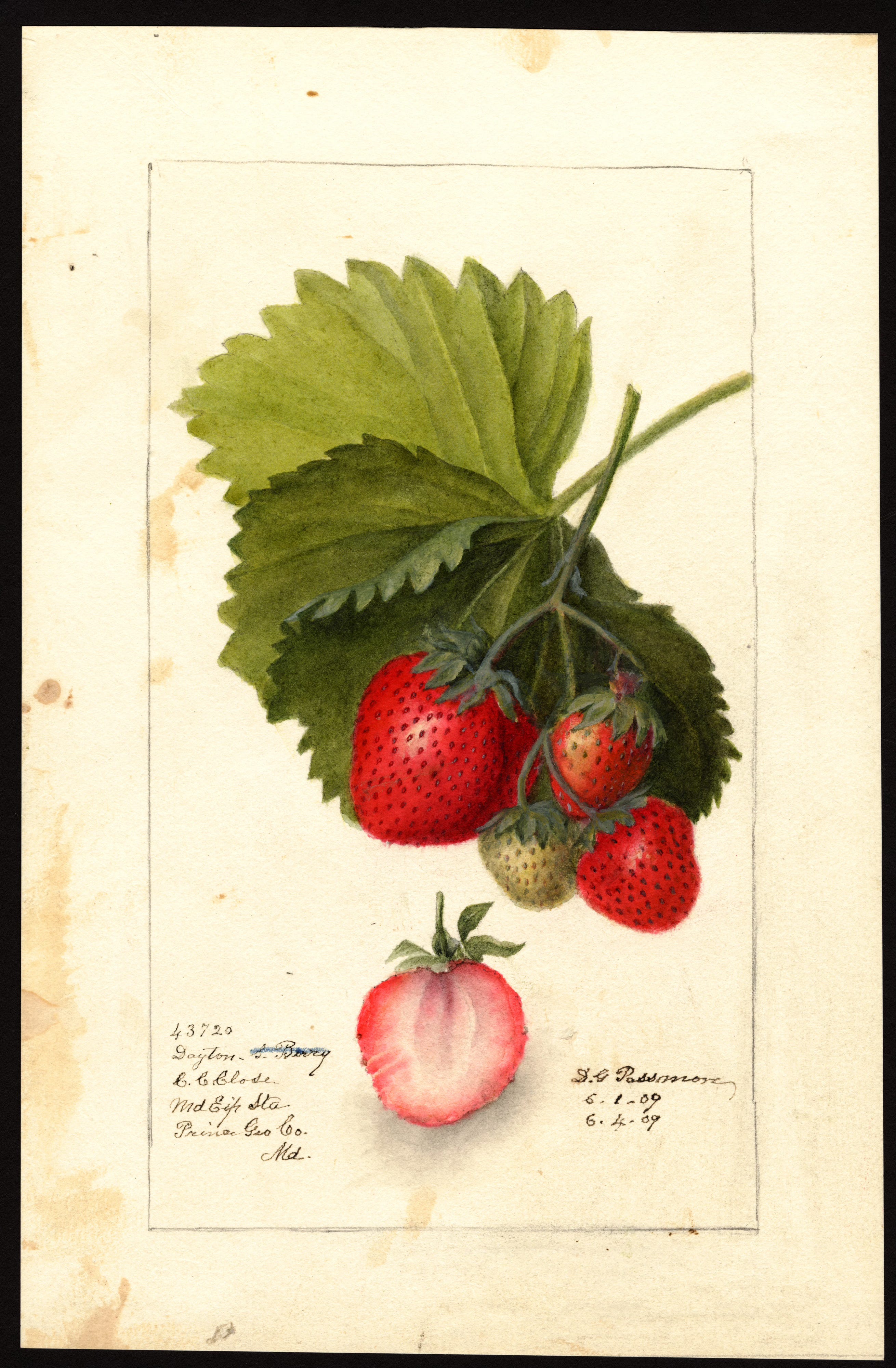
Perhaps the most poignant aspect of browsing these watercolors is contemplating the tastes we’ve lost forever. Old-time orchardists say varieties like the Junaluska apple was once a Southern favorite, but disappeared around 1900. The Colorado Orange was first developed in an orchard in Fremont County, CO, and was a popular fruit throughout its namesake state in the 1800s, winning awards at local fairs and noted for its unusual color and notes of citrus.
“An apple tree you’ve never tasted before, a taste somebody hasn’t tasted in a hundred years, it’s rewarding knowing that we brought these varieties back,” Benscoter said. “Saving an apple from the brink of extinction is a miraculous feeling,” says Brown. “It’s incredibly rewarding—and incredibly addictive!”
The watercolors can’t convey flavor, but they hint at the incredible diversity we’ve surrendered in the name of efficiency. Apples that were specifically bred for cider-making, others perfect for drying, some that could survive in root cellars until spring, others best eaten fresh from the tree on a particular week in October.
You might reasonably ask: in an era of climate change, global supply chain disruptions, and increasing concerns about agricultural resilience, why should we care about some quaint heirloom apples?
The answer lies in what geneticists call the “founder effect.” “We get excited when they make discoveries,” said USDA apple curator Ben Gutierrez, who has collaborated with Benscoter. “Because it’s a push for Apple conservationism.” Gutierrez said the rediscoveries are a step toward increased genetic diversity of apples. Each recovered variety represents genetic material that might contain solutions to future agricultural challenges—disease resistance, climate adaptability, improved nutrition, or simply better flavor.
Amit Dhingra, who used to run a genomics lab at Washington State Univeristy, recognized the potential of these tough, field-tested trees for traits which may be useful in breeding apple varieties able to withstand harsher climate conditions. Those old varieties survived decades or centuries with minimal human intervention, developing natural resistance to local pests and diseases, adaptations to specific climatic conditions, and resilience that modern commercial varieties often lack.
The USDA Pomological Watercolor Collection offers more than agricultural history—it’s a portal into a time when America’s relationship with food was fundamentally different. When every farm was a research station, every orchard keeper was an experimenter, and every apple variety represented someone’s best attempt to create something both beautiful and useful. Browsing through these paintings, you can almost taste the optimism of an era when people believed that with enough observation, patience, and care, they could create better versions of everything—including fruit that would nourish both body and soul.
The next time you grab a perfectly uniform apple from the grocery store, remember that it’s the survivor of one of the greatest extinctions in agricultural history. And somewhere in those digitized watercolors, painted with loving precision by forgotten government artists, lie the ghosts of thousands of varieties that once made America’s orchards as diverse as its people.
The rabbit hole beckons, dear readers. Just mind the gap between what we had and what we’ve kept, and don’t forget to appreciate the complex flavors we’ve inherited from the varieties that survived. - ∞