
The Pulp Fiction Renaissance: Cornell Woolrich and the Golden Age of Detective Pulp
A Supreme Master of Psychological Suspense, His Dark Tales Dominated the Golden Age of Radio and Spawned More Than 30 films, Including Alfred Hitchcock's famous "Rear Window."


In dimly lit rooms across America, readers once held their breath, turning pages written by a master of suspense they'd never meet. While Dashiell Hammett gave us hard-boiled detectives and Raymond Chandler painted portraits of corrupt cities, Cornell Woolrich specialized in something far more intimate: the architecture of fear itself. He wrote of ordinary people trapped in extraordinary circumstances – young lovers pursued by faceless killers, innocent men framed for impossible crimes, and seemingly normal neighbors harboring terrible secrets.
Though time has burnished the names of some noir writers into legend, others have slipped into the shadows they wrote about so eloquently. Woolrich, despite penning over two dozen novels and hundreds of short stories that went on to inspire approximately 33 films – including works by filmmakers from Alfred Hitchcock to François Truffaut – remains something of a hidden treasure. He stands as a writer's writer whose psychological insights into terror and suspense feel more relevant than ever in our age of true crime obsession and psychological thrillers.
Of all Woolrich's haunting tales of crime and punishment, 1940's "The Bride Wore Black" stands as perhaps the perfect gateway into his shadow-draped world. The novel follows Julie Killeen, a mysterious woman systematically hunting down and killing five men for reasons that remain tantalizingly unclear until the story's devastating conclusion. While the plot might sound straightforward, Woolrich's genius lies in how he transforms this revenge narrative into a meditation on grief, justice, and the psychological toll of vengeance.
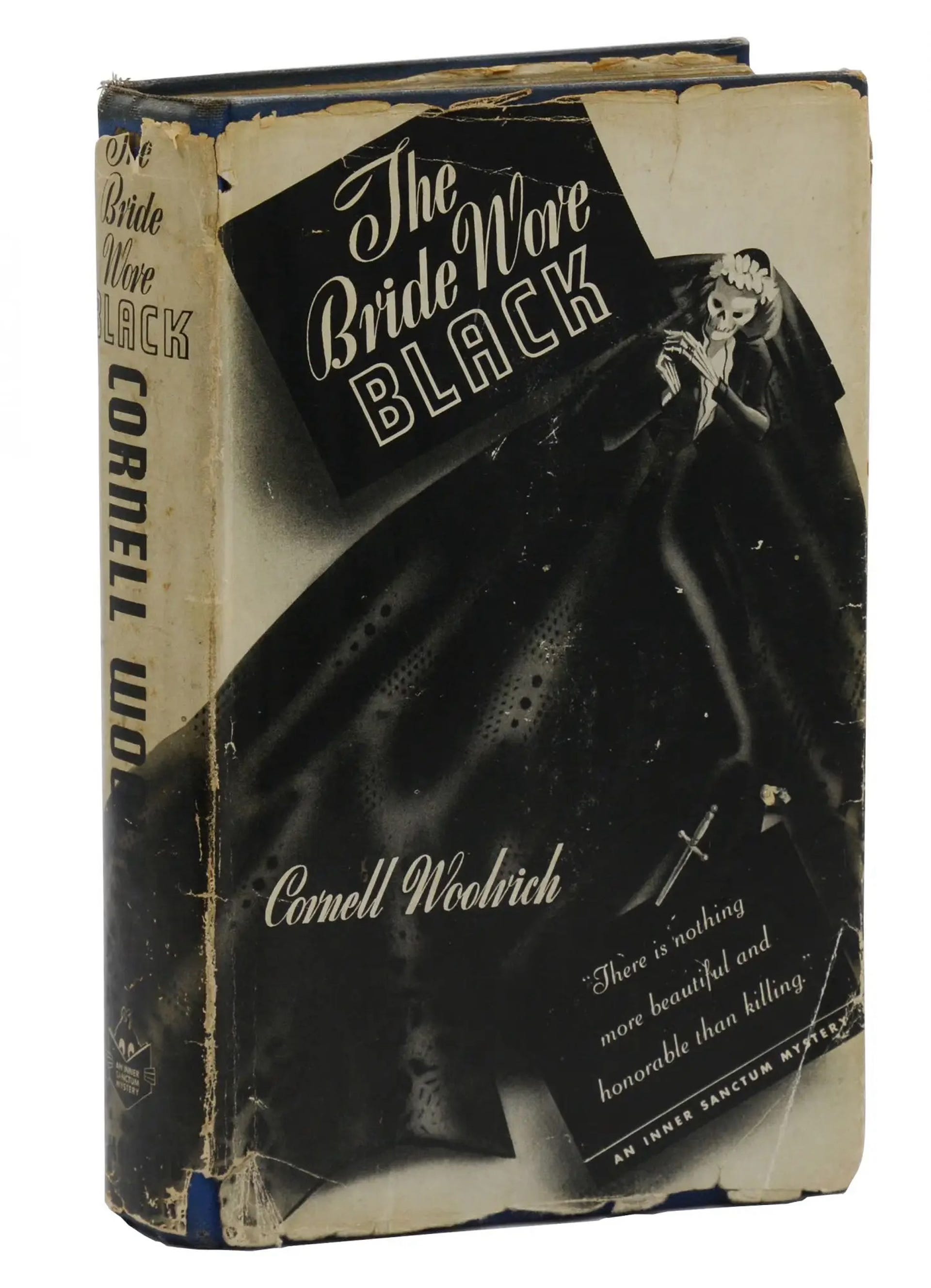
Above: A rare 1940 first edition of Woolrich’s “The Bride Wore Black.” $2,500. Although it was Woolrich's seventh novel, it was his first in the noir style that would launch his career. François Truffaut adapted the novel for his 1968 film under the same title, and it went on to inspire Quentin Tarantino’s Kill Bill movies. The book is still in print 80 years after its release. In his introduction to the 2021 edition, noir guru Eddie Muller wrote, “Woolrich was the most noir writer in the mystery genre, as The Bride Wore Black amply proves. It contains all the requisite elements: the obsessive protagonist on a murderous quest, the latticework of dreadful coincidence, the relentless (and sometimes strangely exhilarating) spiral into madness, the denouement that twists the knife an extra turn.”...
What makes this novel particularly significant is how it exemplifies Woolrich's unique ability to blend pulp fiction's page-turning urgency with sophisticated psychological insight. Each chapter functions almost like a self-contained short story as Julie corners each of her victims, allowing new readers to experience Woolrich's mastery of both long-form suspense and the tight plotting he honed writing for pulp magazines like "Black Mask" and "Dime Detective."
However, for those seeking to understand why Woolrich's work translated so brilliantly to other media, one need look no further than his short story "After-Dinner Story." This masterpiece of psychological suspense, which follows a group of strangers trapped in an elevator before culminating in a deadly dinner party, showcases why his work was particularly well-suited for radio adaptation. The story's confined spaces, mounting tension, and focus on psychological terror over visual horror made it ideal for the intimate medium of radio drama. Woolrich would go on to write over 40 episodes for such shows as Suspense, Escape, and Mystery Playhouse, cementing his influence on the Golden Age of Radio alongside his profound impact on cinema.
What sets Woolrich apart from his contemporaries isn't just his mastery of suspense – it's his deep understanding of human nature under pressure. His characters aren't the wise-cracking private eyes or femme fatales of typical noir fiction. Instead, they're people like us, caught in webs of circumstance that tighten with each passing page. This emotional authenticity, combined with plots that wind like clockwork toward their inevitable conclusions, makes his work feel surprisingly modern despite being written over half a century ago. ∞
Care to follow the rabbit? Click on the links below:
BBC Audio Version of Woolrich's "It Had to Be Murder" (adapted by Alfred Hitchcock as “Rear Window” in 1954)
Cornell Woolrich's "After Dinner Story" (Suspense, Ep 063, Broadcast 10-26-1943)